

Breast augmentation is a cosmetic surgical procedure designed to enhance breast volume, improve body proportions, and
support greater confidence in one’s appearance. At Lelux Hospital, breast augmentation is performed using implant options
from established brands such as Mentor and Motiva, with treatment plans developed by plastic surgeons based on each
patient’s anatomy, goals, and individual needs.
From consultation and implant selection to surgical planning and postoperative care, our team provides coordinated support
throughout each stage of the treatment journey.
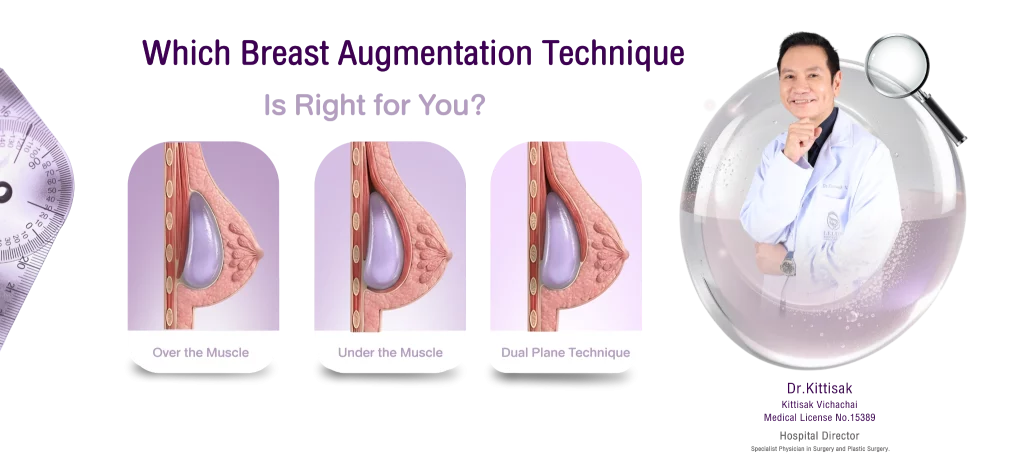
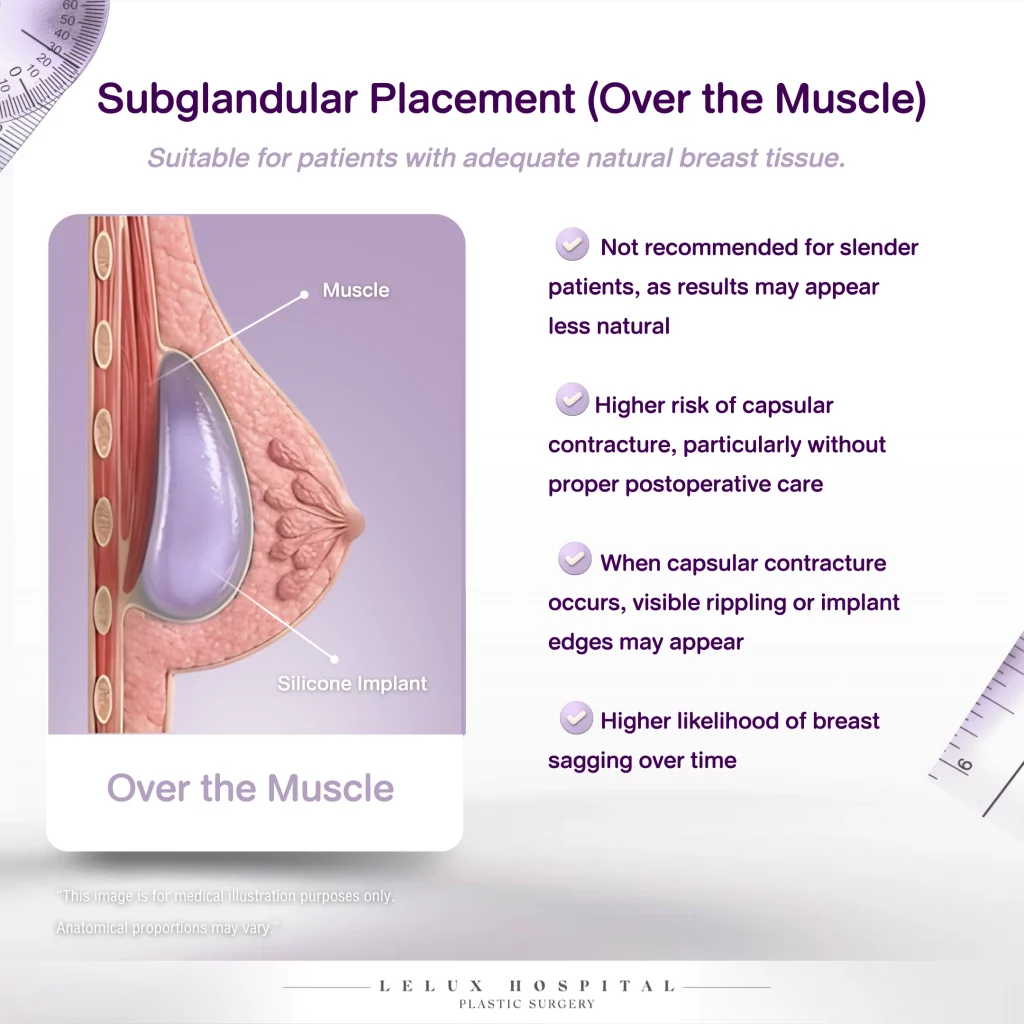
In this technique, the implant is placed above the chest muscle and
beneath the natural breast tissue. It may be considered for patients
who have sufficient tissue coverage to help create a smooth and
balanced breast contour.
Because the implant is positioned in a more superficial layer, some
patients may experience less muscle-related discomfort during
recovery. However, in patients with thin or limited natural breast
tissue, implant edges or rippling may be more noticeable.
Key Considerations
• Implant positioned above the chest muscle
• May be suitable for patients with adequate natural breast tissue
• May involve less muscle-related discomfort in some patients
• Implant edges or rippling may be more visible when tissue coverage is
limited
• Long-term results depend on anatomy, tissue quality, implant selection,
and surgical planning
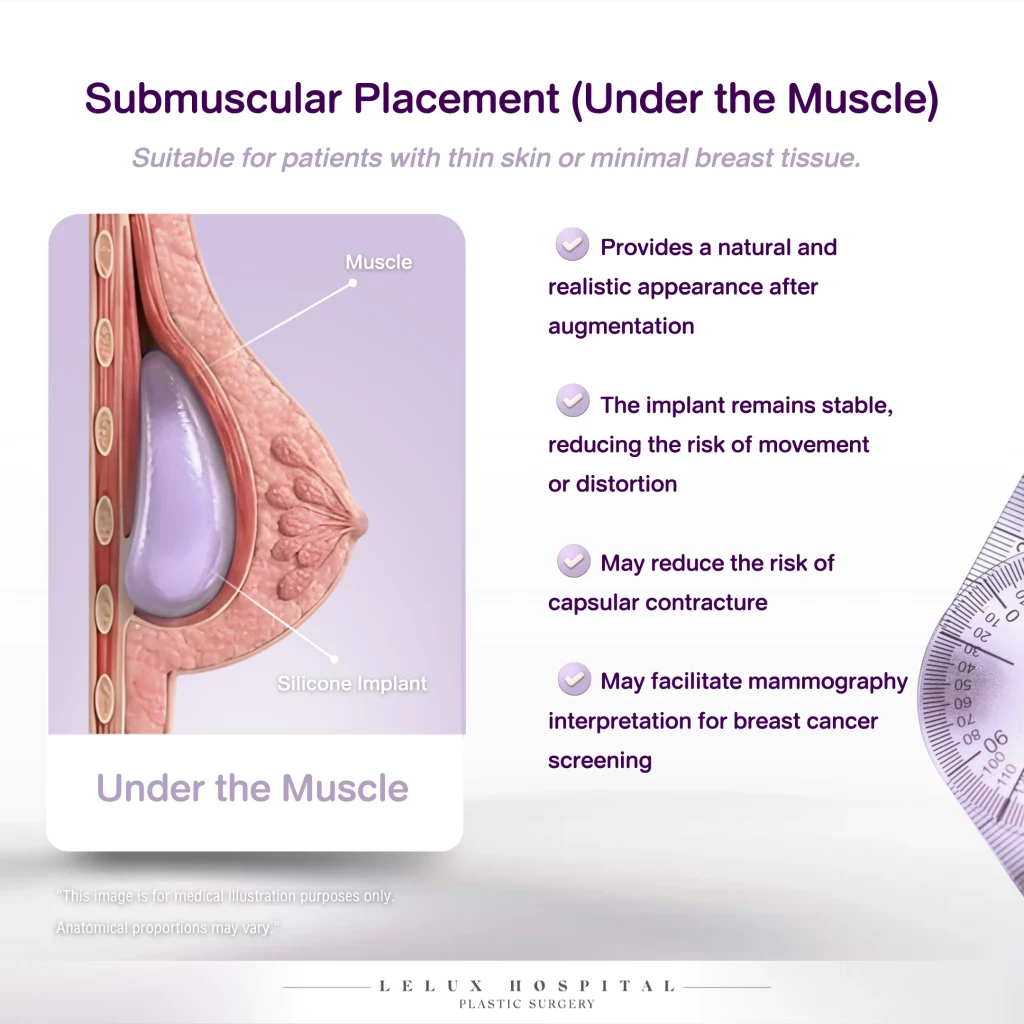
In this technique, the implant is placed beneath the chest muscle,
allowing the muscle to provide additional coverage over the implant.
This may help create a smoother upper-breast contour and a more
natural-looking result in selected patients.
Because the implant is positioned in a deeper plane, this technique
may also help improve implant stability and reduce the visibility of
implant edges or rippling in some cases. It is often considered for
patients with limited soft-tissue coverage or those who may benefit
from additional upper-pole support.
Key Considerations
• Implant positioned beneath the chest muscle
• May help create a more natural-looking upper-breast contour
• May improve implant stability
• May reduce visible implant edges or rippling in selected cases
• May be considered for patients with thin skin or limited natural breast
tissue
• Suitability depends on anatomy, tissue characteristics, and surgical
planning
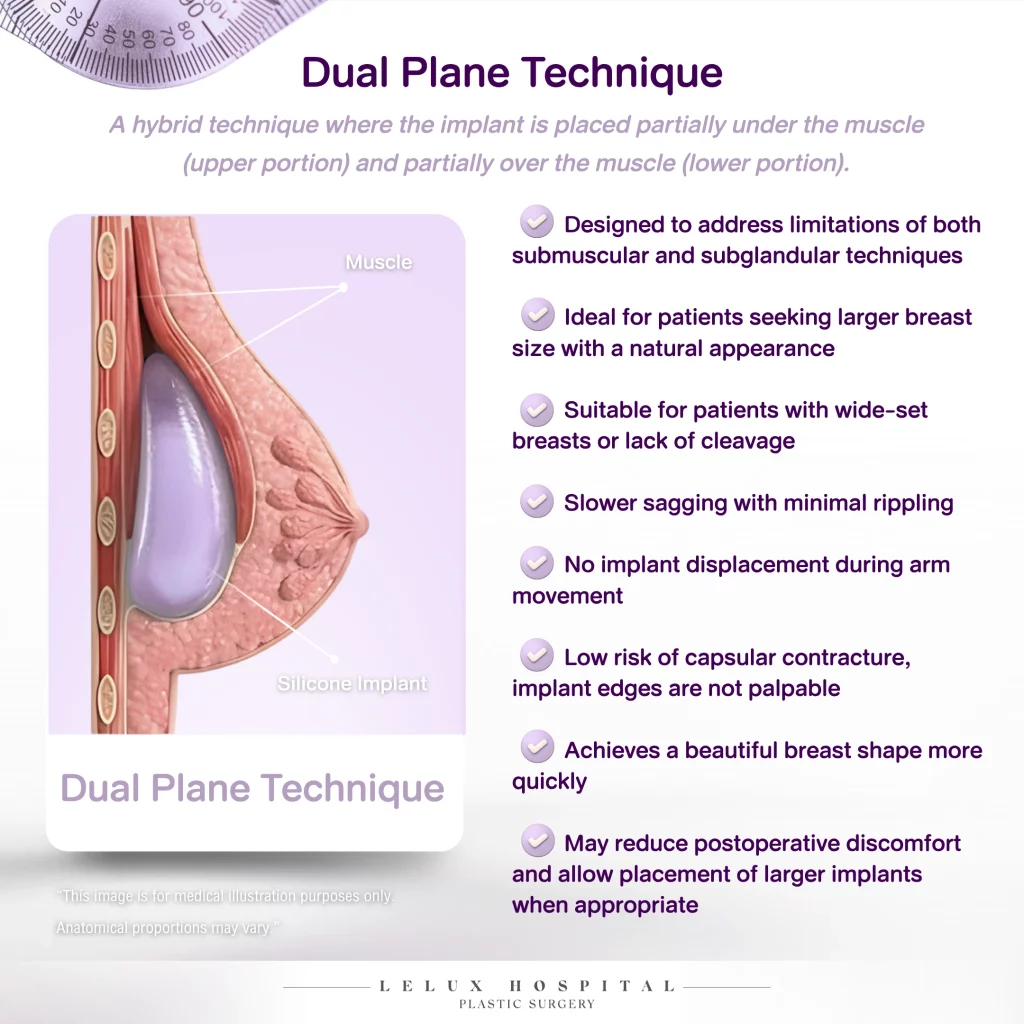
The Dual Plane technique combines elements of both submuscular
and subglandular placement. The upper portion of the implant is
covered by the chest muscle, while the lower portion is positioned
beneath the breast tissue, allowing for a balance between upper-pole
coverage and lower-breast expansion.
This approach may be considered in patients who would benefit from
a softer upper-breast transition while maintaining a more natural
lower-breast contour. It may also be helpful in selected cases where
breast shape, tissue coverage, or mild sagging need to be addressed
as part of the surgical plan.
Key Considerations
• Combines muscle coverage in the upper portion with breast tissue
coverage in the lower portion
• May help create a natural upper-breast slope and smoother lower
contour
• May reduce the visibility of implant edges or rippling in selected
patients
• May be considered for patients with mild breast sagging, limited upper-
pole tissue, or specific contour concerns
• Offers a more customized approach based on anatomy and surgical
goals
• Suitability depends on individual assessment and surgical planning
The most appropriate implant placement should be determined after an individual assessment by a plastic surgeon
Two incision approaches, selected based on anatomy, implant choice, and surgical planning.
| Comparison | Transaxillary Incision | Inframammary Incision | Incision Location | Within the natural underarm fold | Along the natural fold beneath the breast |
|---|---|---|
| Scar Position | Keeps the incision away from the breast itself | Scar is positioned within or near the breast fold |
| Surgical Access | Implant pocket is accessed from the underarm | Provides direct access to the implant pocket |
| Implant Positioning | Requires careful pocket creation and precise implant placement | precise implant placement Allows direct visualization and control during implant placement |
| Key Advantage | No incision directly on the breast | Direct surgical access for implant positioning |
| Key Consideration | More technically demanding and depends on individual anatomy | Scar visibility varies according to healing and skin characteristics |
| Suitable For | Selected patients based on anatomy, implant type, and surgical plan | Selected patients based on anatomy, implant type, and surgical plan |
Approximately 3–4 cm in selected cases
At Lelux Hospital, breast augmentation may be performed through an incision of approximately 3–4 cm in selected patients,
depending on the implant type, surgical technique, and individual anatomy.
Careful wound closure is planned with consideration for incision placement, tissue healing, and postoperative scar care.
The appropriate incision location and length are determined individually by the plastic surgeon.
Balanced Volume Designed to Complement Your Body Proportions

Every breast augmentation plan is personalized based on individual anatomy, chest structure, body proportions, and aesthetic goals. Implant size, shape, and positioning are carefully considered to create a balanced result that complements each patient’s unique figure.
Personalized Proportion Analysis

Tailored Size & Shape Selection

Designed for Your Unique Beauty
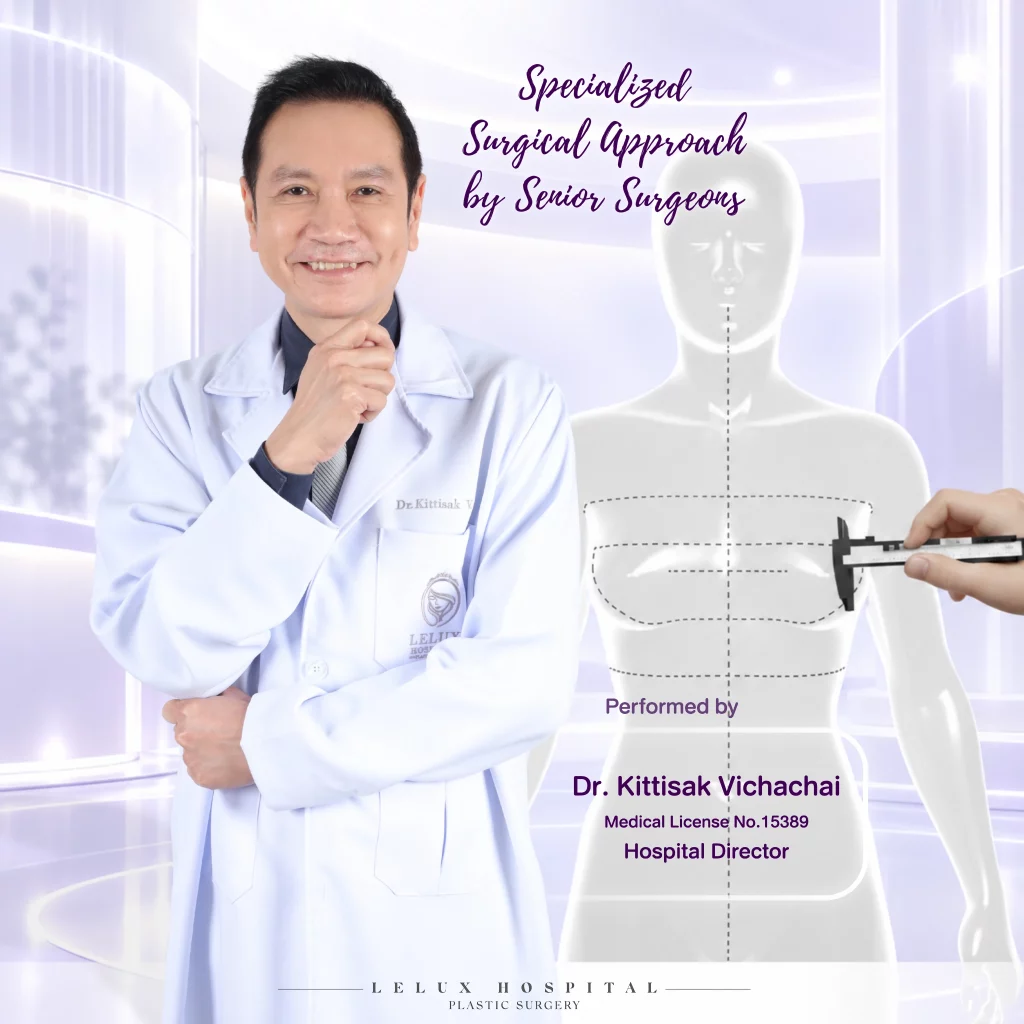
A Specialized Approach by Lelux Hospital
The Fix Body Concept focuses on precise assessment of individual body proportions and breast anatomy to guide implant selection and positioning.
Implant placement is carefully planned according to each patient’s anatomy, helping create a breast shape that appears balanced, soft, and natural-looking.
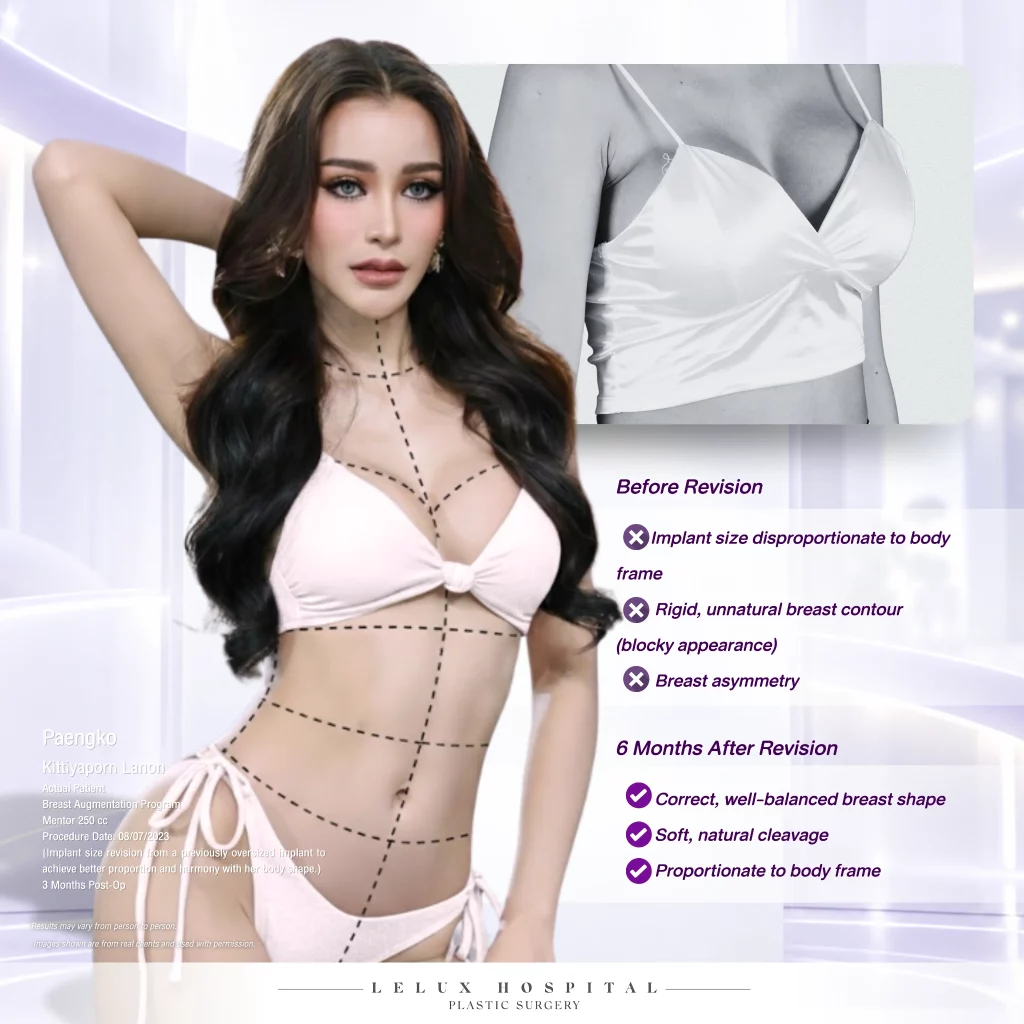
The goal is not simply to increase breast volume, but to create a shape that works in harmony with the patient’s overall body proportions.
Breast augmentation may be considered by individuals who would like to enhance breast volume, restore fullness, improve overall breast proportions, or address differences in breast size or shape.
The decision to undergo surgery should be based on individual goals, physical assessment, and consultation with a plastic surgeon
Suitability for surgery is determined individually following medical assessment.
A consultation provides an opportunity to discuss your concerns, expectations, previous surgical history, and preferred breast appearance with the medical team.
During the consultation, the plastic surgeon may review your current breast condition and discuss treatment options that may be appropriate for you.
Discuss the breast shape, volume, and overall appearance you would like to achieve.
Review relevant health information and previous breast procedures, if applicable.
Evaluate the current breast condition, tissue characteristics, and other factors relevant to surgical planning.
Review available surgical approaches, implant options, and important considerations before deciding on treatment.
Once a treatment plan has been established, the medical team will provide preoperative instructions appropriate to your individual case.
Preparation may include medical evaluation, review of medications or supplements, and instructions regarding eating, drinking, and other precautions before surgery.
Patients should follow the instructions provided by their surgeon and medical team carefully.
Preoperative requirements may vary between patients.
Recovery after breast augmentation varies from person to person.
Temporary swelling, tightness, soreness, or changes in sensation may occur during the early recovery period. The medical team will provide postoperative instructions regarding wound care, activity, support garments, medication, and follow-up appointments as appropriate.
Recovery time and postoperative recommendations vary according to the individual patient and surgical procedure.
Postoperative follow-up allows the medical team to monitor healing and evaluate recovery over time.
Breast shape may continue to change as swelling decreases and the tissues adjust following surgery. Patients should attend follow-up appointments according to the schedule recommended by their surgeon.
The final appearance should be evaluated after an appropriate healing period rather than immediately after surgery.
Breast augmentation is a surgical procedure and, like any surgery, involves potential risks and considerations.
These may include bleeding, infection, changes in sensation, scarring, implant-related complications, asymmetry, capsular contracture, or the possibility of additional surgery in the future.
Individual risks vary according to health status, anatomy, implant choice, surgical technique, and other factors.
Your plastic surgeon should discuss the potential benefits, limitations, and risks of surgery with you before the procedure.
Breast implants may require monitoring over time and should not be considered lifetime devices.
Changes in the breast, implant condition, personal preferences, or medical considerations may lead some patients to consider additional evaluation or surgery in the future.
Patients should continue appropriate follow-up and discuss any changes or concerns with their medical team.
Implant size should not be selected based on volume alone. The surgeon will consider your breast condition, chest dimensions, tissue characteristics, preferred appearance, and other relevant factors before recommending suitable options.
Natural breasts commonly have some degree of asymmetry. Surgery may improve certain differences, but complete symmetry cannot be guaranteed.
The appearance of the breasts changes during healing as swelling decreases and tissues adjust. The time required varies between individuals.
Breast implants are not considered lifetime devices. Replacement is not required on a fixed schedule for every patient, but further evaluation or surgery may be necessary depending on implant condition, breast changes, symptoms, or personal preference.
In selected cases, breast implant revision may be considered to address implant size, breast shape, implant condition, or other concerns. An individual assessment is required to determine the appropriate approach.
Breast augmentation is a surgical procedure. The appropriate implant, surgical technique, and treatment plan vary between individuals.
All surgical procedures involve potential risks. Patients should receive an individual medical assessment and discuss expected outcomes, limitations, possible complications, postoperative care, and long-term implant considerations with their plastic surgeon before making a treatment decision.
Results may vary from person to person.