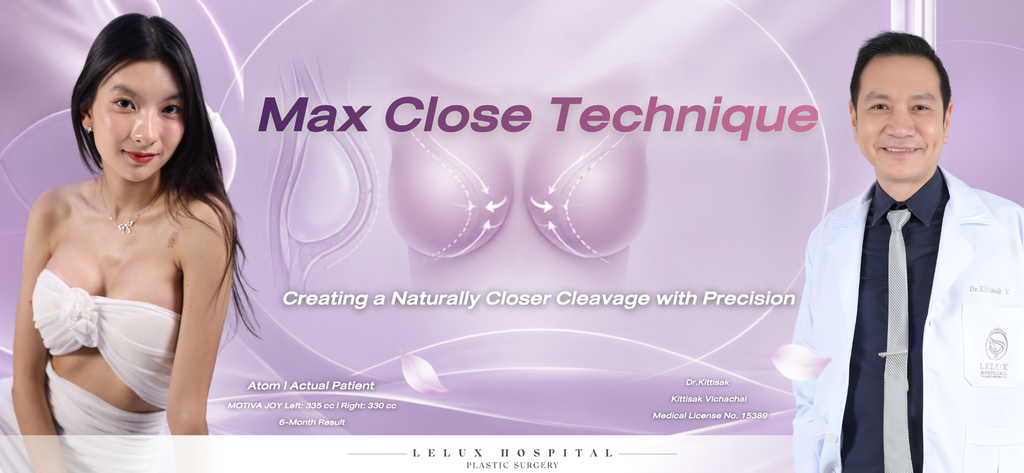
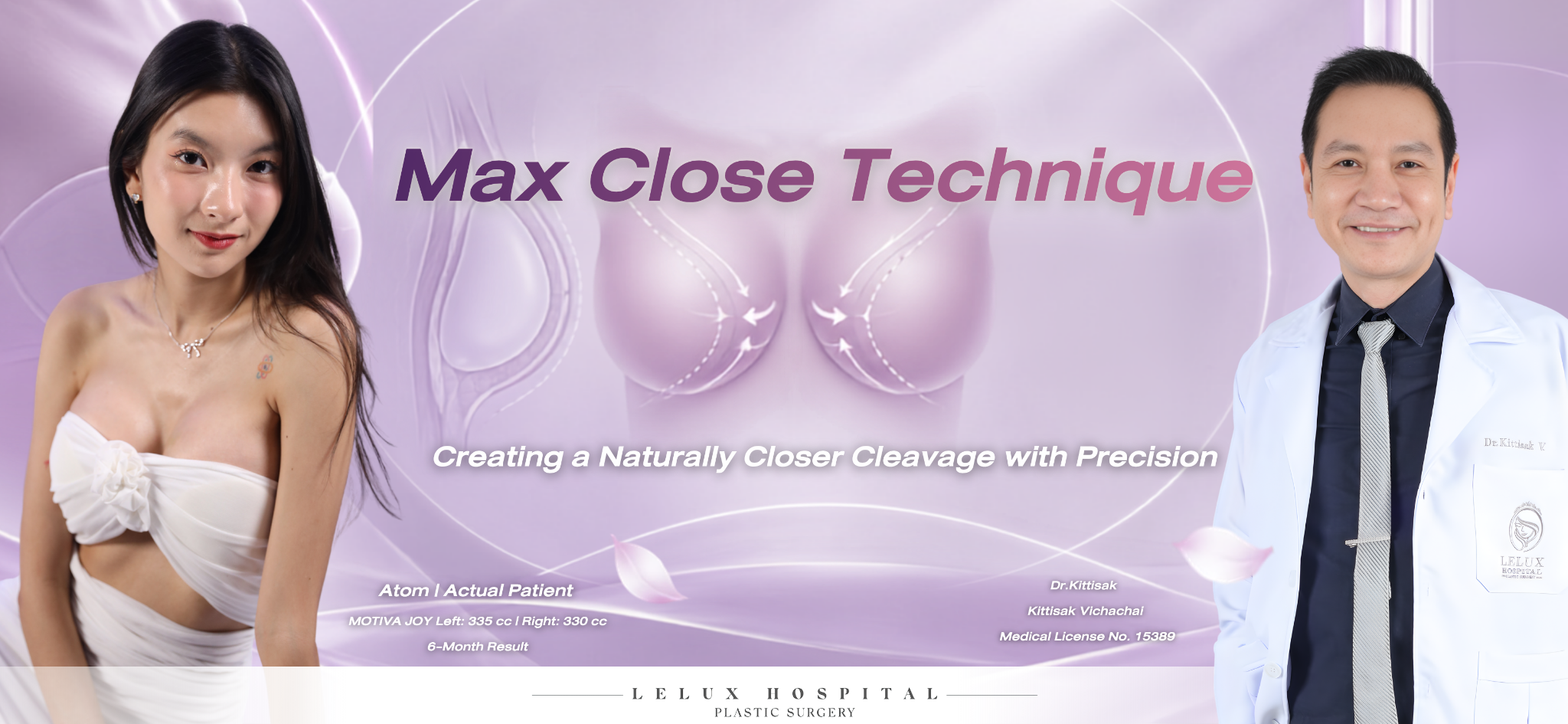
Creating a Naturally Closer Cleavage with Precision
A beautifully shaped breast augmentation is not only about breast size. The position of the implants, the balance between both breasts, the upper-pole contour, and the distance between the breasts all contribute to the overall appearance.
At Lelux Hospital, the Max Close Technique is designed to create a naturally closer cleavage by carefully shaping the breast pocket toward the center of the chest while maintaining appropriate anatomical boundaries.
The goal is to achieve a breast contour that appears balanced, feminine, and naturally close—without excessive separation or an unnatural joined appearance.
What Is the Max Close Technique?
The Max Close Technique is an approach to breast augmentation that focuses on creating the implant pocket as close to the center of the chest as safely and anatomically appropriate for each patient.
During breast augmentation, the surgeon creates a carefully planned pocket where the breast implant will be positioned. With the Max Close approach, particular attention is given to the medial portion of the breast pocket, or the area closest to the center of the chest.
Precise dissection allows the implant to sit closer toward the midline, helping create a more defined cleavage while maintaining a natural separation between the breasts.
Rather than simply placing the implants closer together, the technique requires careful consideration of several factors, including:
- The patient’s natural breast width
- Chest wall anatomy
- Existing breast tissue
- Distance between the breasts
- Implant dimensions and projection
- Skin and soft-tissue characteristics
- Symmetry between the left and right breasts
Every patient’s anatomy is different. Therefore, the appropriate degree of medial pocket creation must be individually assessed rather than applying the same positioning to every patient.
Why Does Creating a Closer Cleavage Require Surgical Precision?
The central chest area requires particularly careful surgical technique.
As the breast pocket is developed closer toward the sternum, the surgeon must work with precision because important blood vessels and soft-tissue structures are present in this region.
Excessive or inappropriate medial dissection may increase the risk of complications such as bleeding or loss of the natural separation between the breasts.
For this reason, creating a closer cleavage is not simply a matter of dissecting the pocket as far inward as possible.
The surgeon must find the appropriate balance between:
bringing the breasts closer together and preserving the natural anatomical boundary between them.
Careful surgical dissection and intraoperative hemostasis—the control of bleeding during surgery—are therefore important parts of the procedure.
Close Cleavage Without an Unnatural Joined Appearance
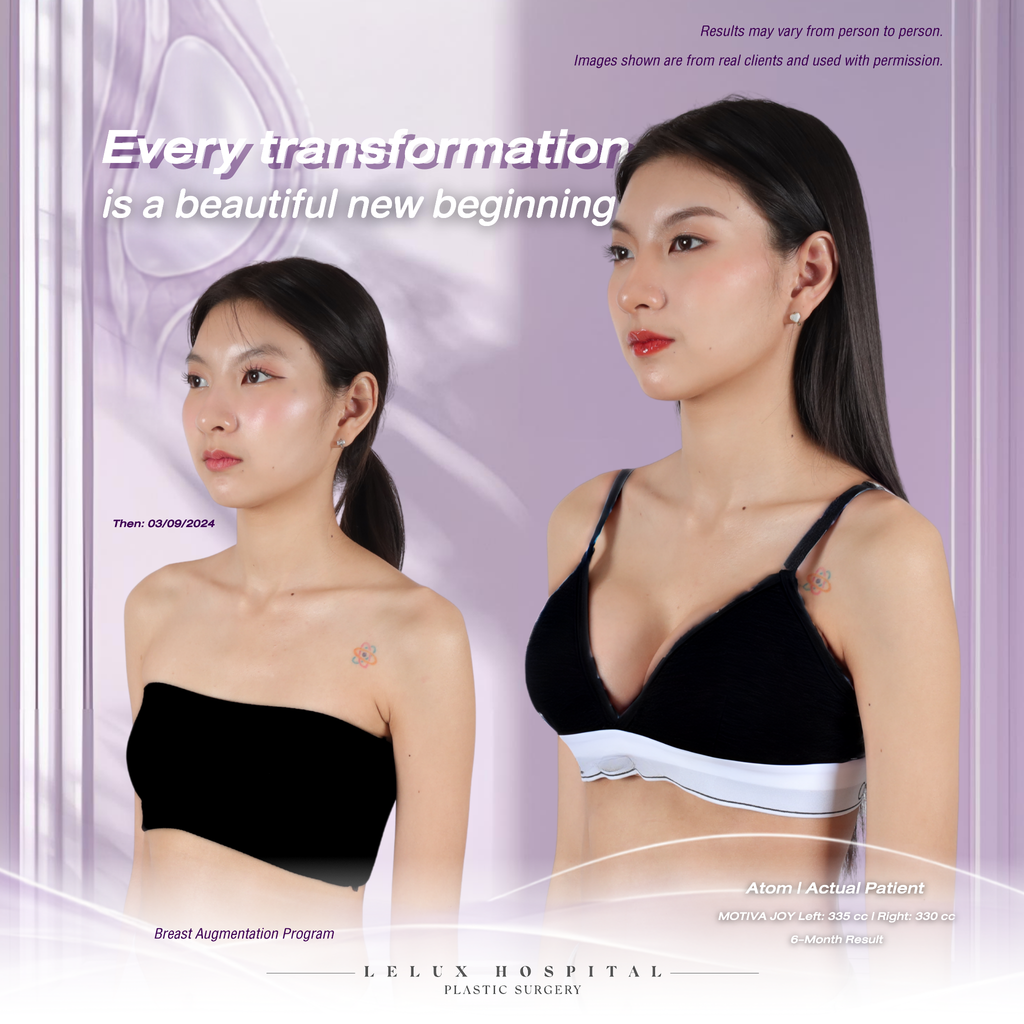
One of the important considerations when creating a closer breast contour is maintaining the natural separation between both breasts.
If the breast pockets are connected excessively across the center of the chest, a condition known as symmastia may occur. This can create the appearance of the breasts joining together across the sternum.
The Max Close Technique therefore focuses on controlled medial pocket development rather than excessive dissection.
The objective is to create:
Closer cleavage, while maintaining a natural central separation.
This helps the breasts appear naturally positioned rather than excessively separated or unnaturally connected.
Attention to Implant Position and Breast Symmetry
A balanced breast augmentation involves more than cleavage alone.
During surgery, attention is also given to the position of each implant and the relationship between both breast pockets.
Careful surgical planning aims to create:
- Balanced left and right breast positioning
- Appropriate medial cleavage
- Controlled lateral implant positioning
- Natural upper-breast contour
- Appropriate implant height
- Balanced inframammary folds
The implant pocket must be developed according to the patient’s individual chest structure so that the implants remain appropriately positioned rather than shifting excessively toward the outer chest.
Incision Placement at the Inframammary Fold
For suitable patients, the surgical incision may be positioned along the inframammary fold, the natural crease beneath the breast.
Careful incision planning allows the scar to follow the breast fold while providing the surgeon with direct access to create and control the implant pocket.
Attention is also given to the level and balance of the inframammary folds on both sides so that the breast position and incision locations remain appropriately aligned with the patient’s anatomy.
The final appearance and visibility of scars vary depending on individual healing, skin characteristics, surgical technique, and postoperative care.
Creating a Natural Upper-Breast Contour
Another consideration in breast augmentation is the transition between the upper chest and the breast.
An implant positioned too high may create an overly elevated or unnatural upper-breast appearance. Conversely, inappropriate pocket positioning may affect breast shape and symmetry.
With careful pocket creation, implant selection, and intraoperative assessment, the surgeon aims to create a smooth transition from the upper chest into the breast contour.
The objective is not simply to create prominent cleavage, but to achieve an overall breast shape that is proportional to the patient’s body.
Breast Augmentation Should Be Designed for Individual Anatomy
The distance between the breasts is influenced by natural anatomy.
Some patients naturally have a narrow space between the breasts, while others have a wider sternum or different chest-wall structure.
Because of these anatomical differences, the amount of achievable cleavage varies from person to person.
Before surgery, the surgeon evaluates factors such as:
- Chest width and shape
- Natural breast base
- Existing cleavage distance
- Breast asymmetry
- Skin elasticity
- Amount of breast tissue
- Nipple position
- Inframammary fold position
- Implant size and dimensions
- Previous breast procedures
The surgical plan is then developed according to the patient’s anatomy, expectations, and appropriate medical considerations.
Breast Augmentation by Dr. Kittisak Vichachai
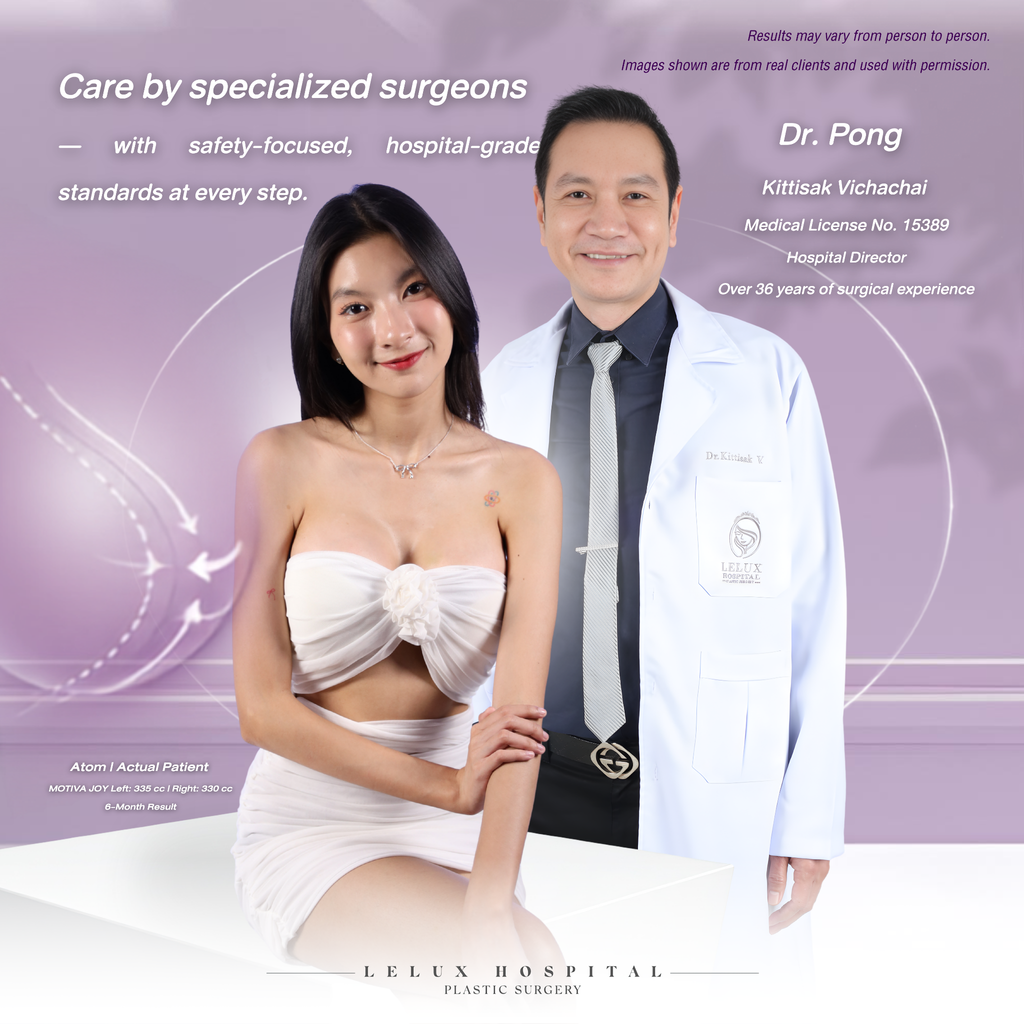
Dr. Kittisak Vichachai
Medical License No. 15389
Hospital Director, Lelux Hospital
Breast augmentation requires careful planning of both implant selection and implant-pocket positioning.
In cases where a patient would like a more defined or closer cleavage, the medial breast pocket requires particularly careful surgical management.
The surgeon must assess how far the pocket can appropriately extend toward the center of the chest while preserving anatomical structures and maintaining natural separation between both breasts.
During surgery, careful dissection and control of bleeding are important, particularly when working near the medial chest area.
At Lelux Hospital, breast augmentation planning considers the patient’s chest anatomy, breast structure, implant dimensions, symmetry, and desired breast contour to determine an individualized surgical approach.
The Max Close Concept at Lelux Hospital
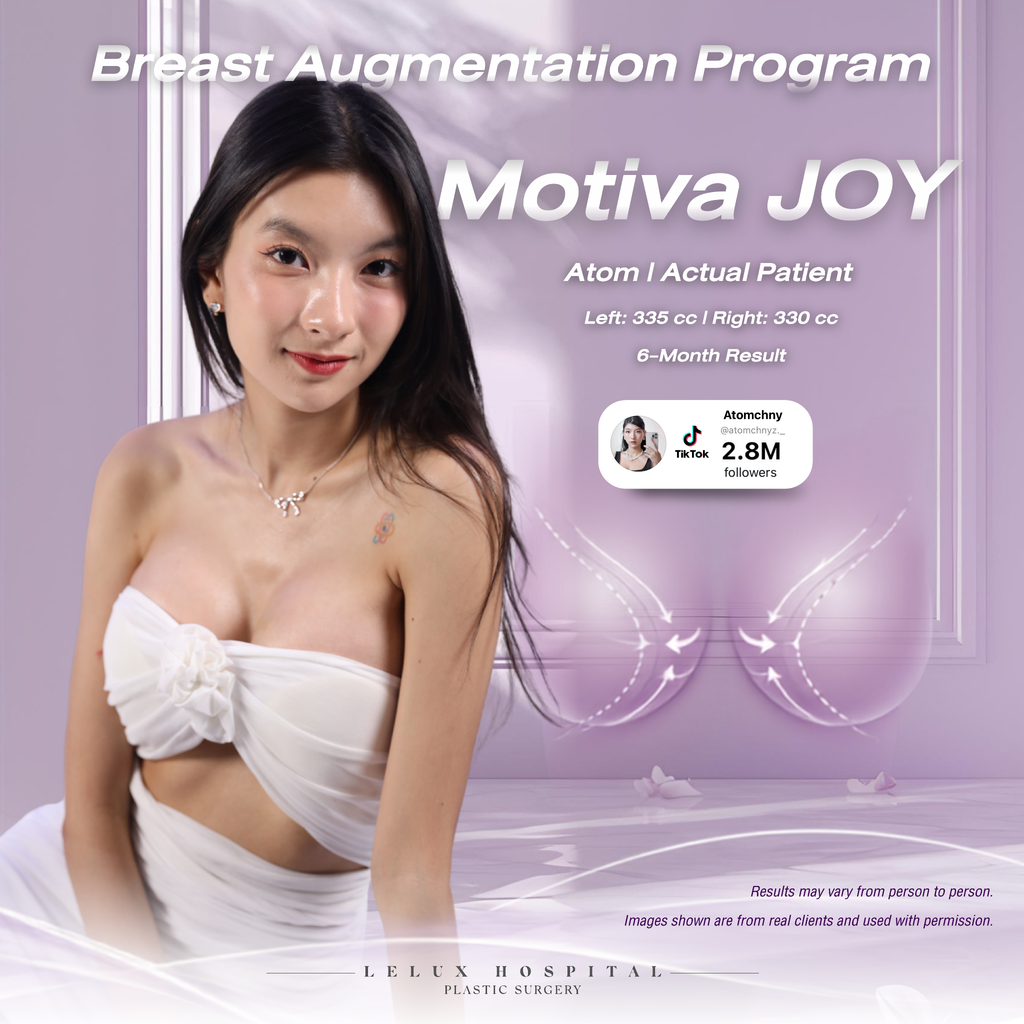
The philosophy behind the Max Close Technique can be summarized as:
Create the closest natural cleavage that is appropriate for the patient’s individual anatomy—without compromising natural breast separation, proportion, or surgical safety.
Breast augmentation is therefore approached as a combination of surgical technique, anatomical assessment, implant selection, and individualized aesthetic planning.
The goal is to create breasts that complement the patient’s body rather than relying on implant size alone.
Individual results may vary depending on anatomy, implant selection, tissue characteristics, healing, and other medical factors. A consultation and physical examination with a qualified surgeon are necessary to determine an appropriate surgical plan.