
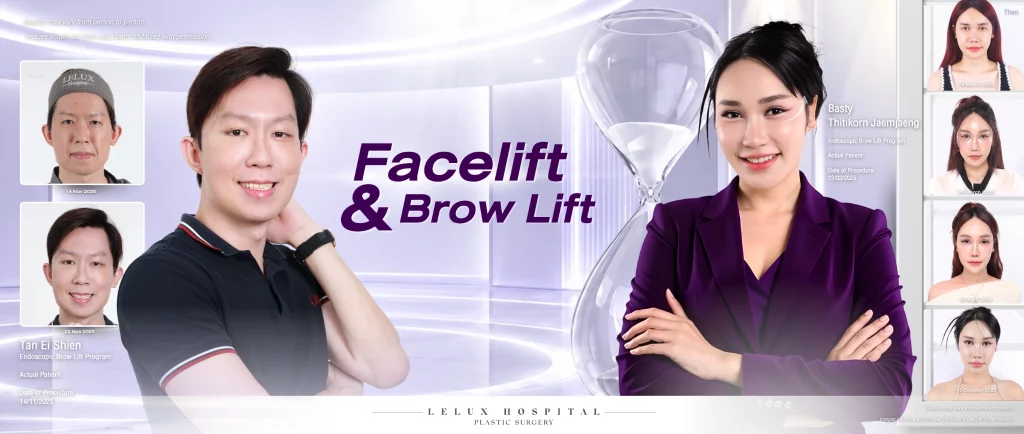
Facelift surgery is a surgical procedure designed to address sagging skin and soft tissue of the face. The surgeon evaluates the degree of facial laxity and creates an individualized surgical plan to lift and reposition the tissues. Excess skin may also be removed when appropriate to help create a firmer appearance and improve facial definition.
Modern facelift surgery is not limited to tightening the outer skin. Depending on the patient’s facial anatomy and concerns, deeper supporting structures, including the SMAS layer, may also be repositioned.
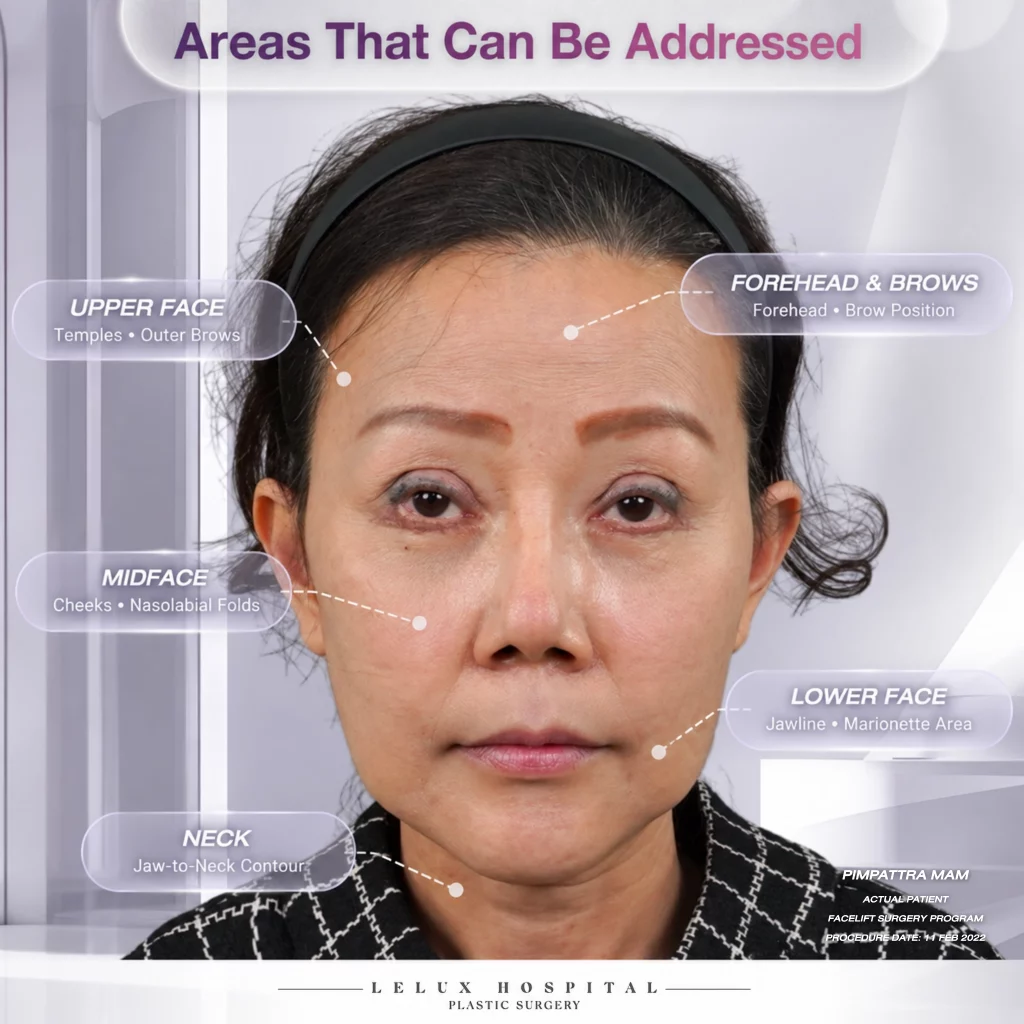
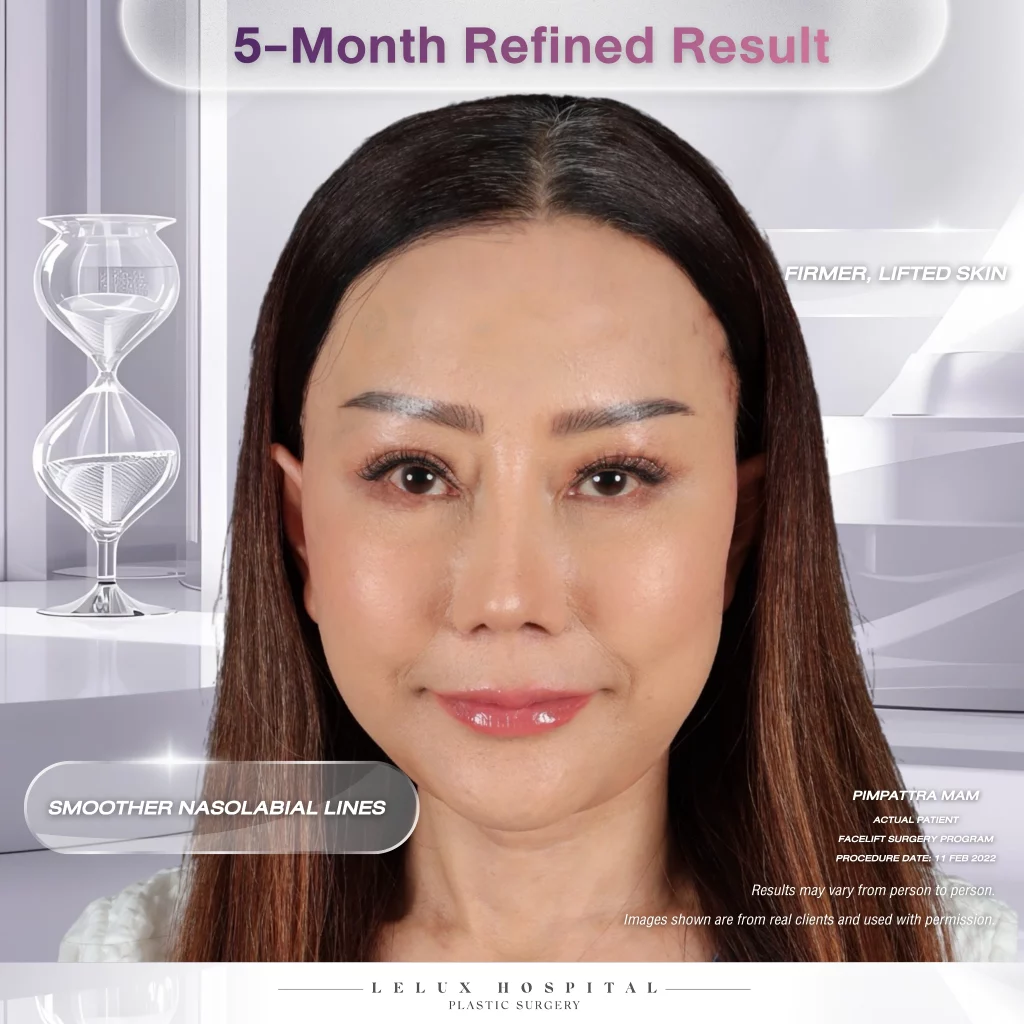
At Lelux Hospital, facelift surgery is individually planned based on facial structure, degree of laxity, and treatment area.
The Deep Locking™ Facelift approach focuses on repositioning both the skin and deeper supporting tissues rather than tightening the surface alone.
Tailored to individual facial anatomy.
Addresses supporting structures beneath the surface.
Planned according to the location of facial laxity.
The SMAS — Superficial Musculoaponeurotic System — is a fibrous supporting layer beneath the skin and superficial fat.
It is connected with the facial muscles and overlying tissues, making it an important structure in facelift surgery. Repositioning the SMAS allows the surgeon to address facial laxity at a deeper structural level.
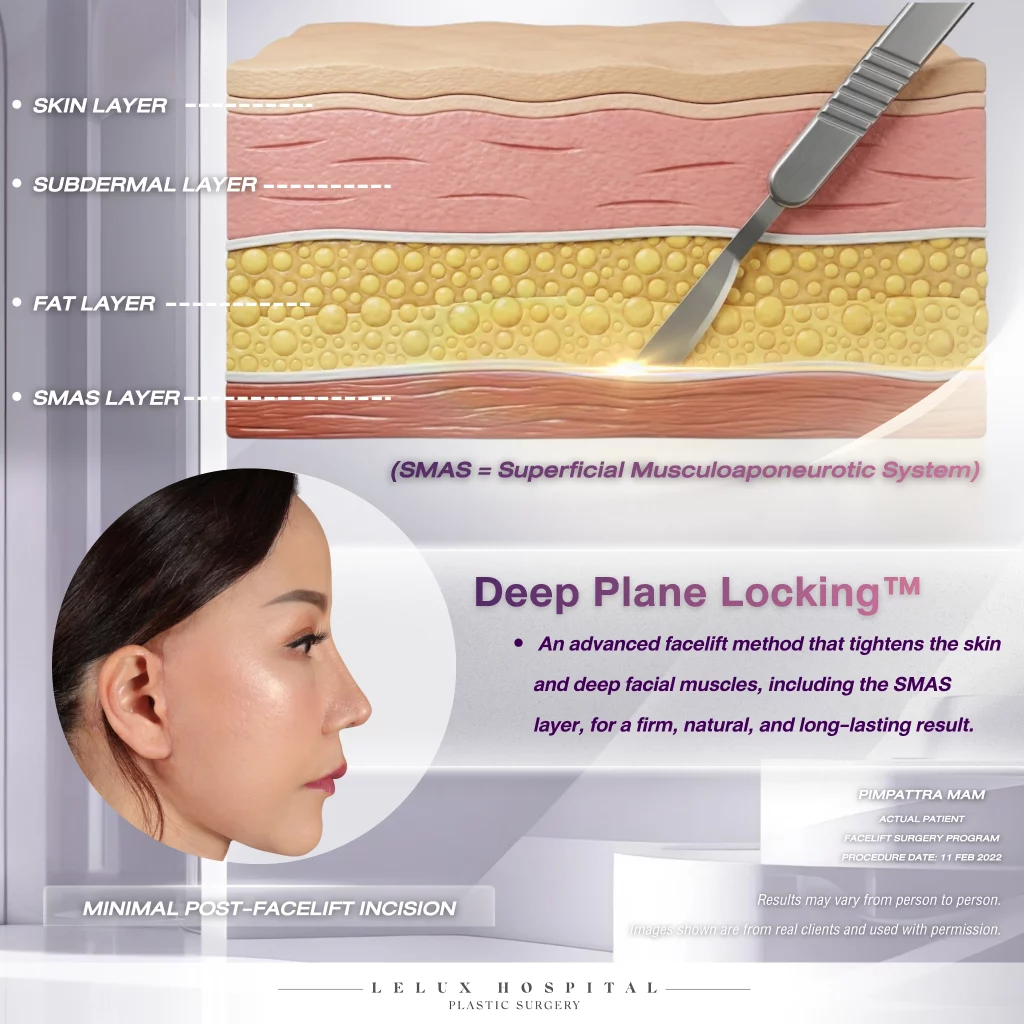
| Layer | Function | Description |
|---|---|---|
| 01 — Skin Layer | Surface Layer | The outermost layer of the face. |
| 02 — Subdermal Layer | Supporting Tissue Layer | Tissue located directly beneath the skin. |
| 03 — Fat Layer | Volume Layer | Provides facial volume and soft-tissue contour. |
| 04 — SMAS Layer | Structural Support Layer | A fibrous supporting layer associated with deeper facial structures. |