

FULL TUMMY TUCK

Abdominoplasty with Umbilical Repositioning

Removing Excess Skin for a Smoother, Firmer Abdominal Contour

Who May Benefit from a Tummy Tuck?

A tummy tuck, medically known as abdominoplasty, is a surgical procedure designed to remove excess abdominal skin and fat while improving the overall contour of the abdomen.

Pregnancy, significant weight changes and aging can cause skin to stretch and lose elasticity. In some cases, it may not fully return to its previous firmness, even with regular exercise and a healthy lifestyle. The procedure may also include repair of separated abdominal muscles when clinically indicated. At Lelux Hospital, surgical planning is considered according to each patient’s anatomy, concerns and treatment goals.

Who May Benefit from a Tummy Tuck?

A full tummy tuck may be considered for people with one or more of the following concerns.

01 Loose Skin After Pregnancy

Excess or sagging abdominal skin that remains after childbirth.

02 Excess Skin After Weight Loss

Persistent loose abdominal skin following significant weight reduction.

03 Skin Laxity After Liposuction

Remaining loose or uneven skin following abdominal fat removal.

04 Abdominal Muscle Separation

Abdominal protrusion associated with separated muscles, when repair is appropriate.

Suitable candidates are generally in good health, have a stable body weight and realistic expectations. Individual assessment is essential.
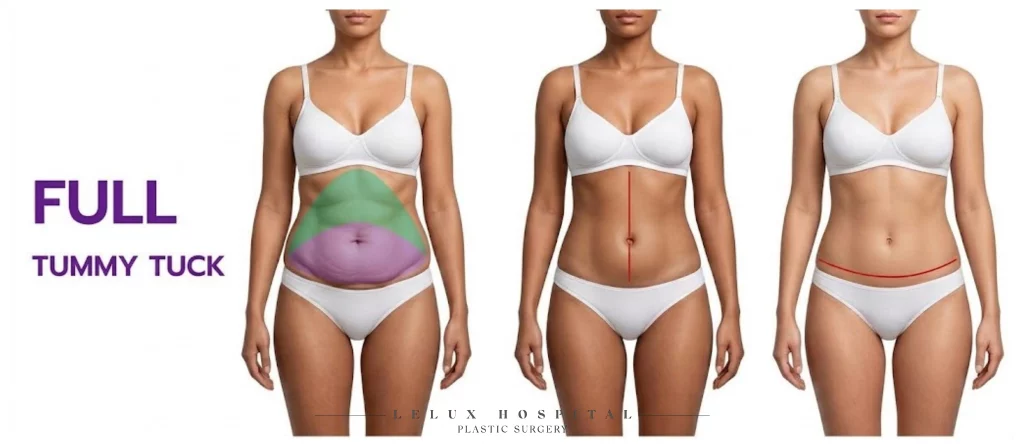


Full Tummy Tuck with Umbilical Repositioning

A full tummy tuck typically addresses excess skin across the upper and lower abdomen. A low horizontal incision allows the surgeon to remove excess skin and tissue, and the abdominal wall may be tightened when necessary. The belly button is generally brought through a new opening in the repositioned skin.

Illustration: A general representation of the treatment area and typical incision placement in a full tummy tuck. Actual surgical technique, incision location and outcomes vary between patients. Diagram for educational purposes only.
 

01 Lower Abdominal Incision

A horizontal incision is made above the pubic area. Its length depends on the extent of excess skin and the patient’s anatomy.

02 Abdominal Wall Tightening

Underlying connective tissue may be tightened to address abdominal muscle separation when clinically appropriate.

03 Excess Skin Removal

Excess abdominal skin and associated fatty tissue are removed, and the remaining skin is repositioned.

04 Umbilical Repositioning

The belly button is brought through a new opening in the abdominal skin, and the incisions are closed.
Estimated surgical duration: Approximately 3–4 hours or longer, depending on complexity and whether additional procedures are performed.

Different Concerns May Require Different Approaches

The appropriate approach depends on where excess skin is located, the abdominal wall condition, the belly button position and how much correction is required.

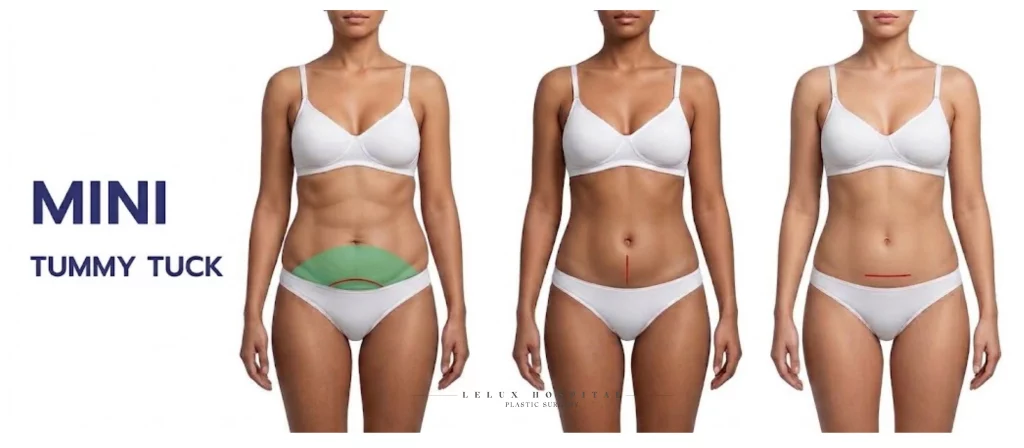
Illustration: A general representation of the treatment area and typical incision placement in a full tummy tuck. Actual surgical technique, incision location and outcomes vary between patients. Diagram for educational purposes only.

Mini Tummy Tuck

Full Tummy Tuck

Focused Correction • Lower Abdomen

  • Primarily the lower abdomen below the belly button
  • Umbilical repositioning is usually not required
  • Usually a shorter lower-abdominal incision
  • Limited tightening may be considered when appropriate
  • Selected patients with limited lower-abdominal skin laxity
 

Upper & Lower Abdomen • More Extensive Reshaping

  • Addresses both the upper and lower abdomen
  • Usually includes umbilical repositioning
  • Generally a longer low abdominal incision, plus an incision around the belly button
  • More extensive tightening may be performed when indicated
  • Patients with more extensive abdominal skin laxity
 

How Is the Technique Selected?

Excess Skin Location


Skin Laxity


Abdominal Wall


Belly Button


Body Proportion


Treatment Goals


Neither technique is inherently better. An individual examination is required to determine which approach may be appropriate.


Before Surgery

Preparing for Tummy Tuck Surgery

Preparation is part of the treatment plan. The medical team will review your health, medications, previous procedures and factors that may affect
surgery or recovery.

Medical Review

Discuss medical conditions, previous surgery, allergies and relevant health history.

Medications

Review prescriptions, over-the-counter medicines, vitamins and supplements.

Smoking & Nicotine

Nicotine may interfere with circulation and wound healing. Follow the surgeon’s instructions regarding cessation.

Alcohol

Alcohol intake may need to be limited or avoided around surgery according to medical advice.

Fasting

Follow the anesthesia team’s instructions regarding when to stop eating and drinking.

Recovery Planning

Arrange transportation home and assistance during the early recovery period when possible.

Important: Do not stop prescribed medication on your own. Any changes should be discussed with your surgeon or prescribing physician.


After Surgery

Recovery & Aftercare

Recovery varies between patients and depends on the extent of surgery, abdominal wall tightening, individual healing and whether additional
procedures are performed.


01 Wound Care

Follow dressing, wound and drain-care instructions provided by the medical team.

02 Gentle Movement

Gentle walking may be encouraged. A slightly flexed posture may be recommended early in recovery.


03 Activity

Return to daily activity gradually and avoid strenuous exercise or heavy lifting until cleared.


04 Compression

A compression garment may be recommended to support the abdomen and help manage swelling.


Recovery Is a Process

Early Recovery

 Swelling, tightness and soreness may be more noticeable.


Gradual Activity

Daily movement can usually increase as healing progresses.


Tissue Settling

Swelling decreases and the abdominal tissues gradually settle.


Long-Term Healing

 The contour and surgical scars continue to mature over time.
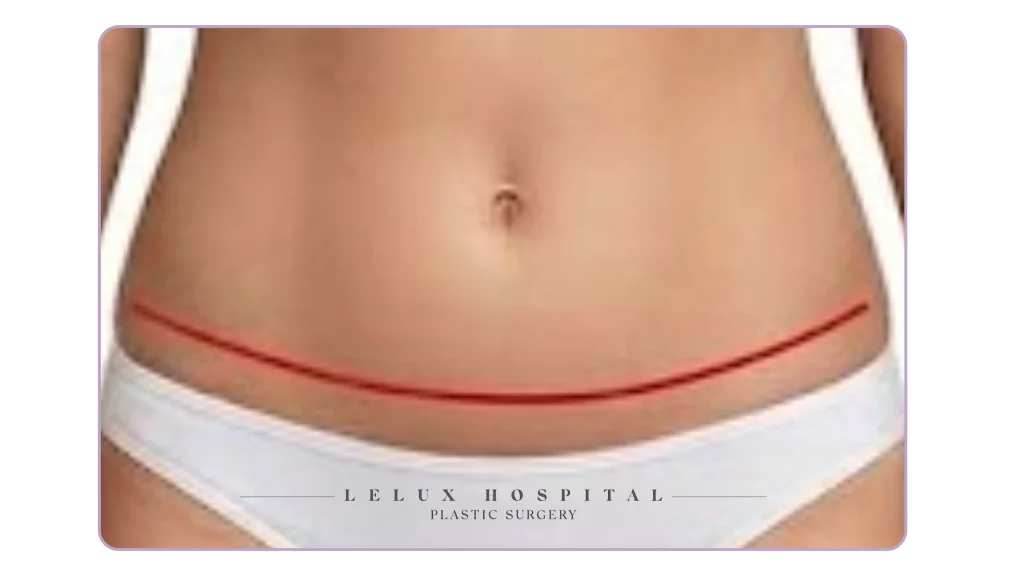


SCAR CARE

Understanding the Tummy Tuck Scar

A tummy tuck requires a surgical incision and therefore results in a permanent scar. For a Full Tummy Tuck, the main incision usually runs horizontally across the lower abdomen, with an additional incision around the belly button when repositioning is performed.

Location

Usually positioned low across the abdomen.


Healing

Scar color, firmness and texture change gradually over time.


Care

Silicone products, topical care or other methods may be recommended after sufficient healing.

 
Illustration: A general representation of the treatment area and typical incision placement in a full tummy tuck. Actual surgical technique, incision location and outcomes vary between patients. Diagram for educational purposes only.
Scar maturation may continue for approximately 6–12 months or longer, depending on the individual.

Safety & Considerations

Making an Informed Decision

PotentialConsiderations

Possible complications may include bleeding, infection, fluid
accumulation or seroma, swelling, bruising, delayed wound
healing, scarring, changes in sensation, asymmetry, blood clots or
the possibility of additional treatment.


Contact the Medical Team If

Severe or increasing pain, excessive bleeding, fever, unusual
wound discharge, rapidly increasing swelling, difficulty breathing,
chest pain or leg swelling develops.


Individual risks vary according to health status, anatomy, smoking or nicotine use, extent of surgery, surgical technique and other factors.

Why Lelux Hospital?

Individual planning from consultation to postoperative follow-up.

PersonalizedPlanning

Assessment of abdominal anatomy, skincondition,
abdominal wall, medicalhistory and treatment goals.

Hospital-BasedCare

Surgical facilities, medical equipment and clinical support withina hospital setting.

Follow-UpCare

Postoperative instructions and follow-up based
onthe procedure and individual recovery.


Frequently Asked Questions

Who may be suitable for a tummy tuck?

Atummy tuck may be considered for adults with persistent loose or excess abdominal skin, changes following pregnancy or significant weight loss,
or abdominal muscle separation whenclinically appropriate.Anindividual assessment is required.

 
What cana tummy tuck improve?

Atummy tuck primarily addresses excess abdominal skinand may improve abdominal contour. Whenappropriate, abdominal wall tightening may also
be performed. It isnot intended as a weight-loss procedure.

Tummy Tuck vs Liposuction — what is the difference?

Atummy tuck primarily addresses excess skinand abdominal wall changes, while liposuctionprimarily removes selected areas of subcutaneous fat. In
some patients, the procedures may be combined whenappropriate.

 
How long does recovery take?

Recovery varies according to the extent of surgery and individualhealing. Discomfort and limited movement may be morenoticeable early on. Normal
daily activity is gradually increased over the following weeks, while strenuous exercise and heavy lifting should only resume after clearance from the
surgeon.

 
How should I care for myself after surgery?

Postoperative care may include wound and draincare, prescribed medication, gentle walking, compressiongarments whenrecommended, temporary
activity restrictions and scheduled follow-up appointments.


Will the scar disappear completely?

No surgical scar canbe guaranteed to disappear completely. It typically changes and becomes lessnoticeable as it matures, but appearance varies with
skincharacteristics, genetics, wound healing and postoperative care.

 
Canloose skinor abdominal fat return?

Tissues removed during surgery donot simply regenerate, but future weight gain, weight loss, pregnancy, aging and changes inskinelasticity canalter
the abdominal contour over time.


Mini or Full Tummy Tuck — which may be appropriate?

The choice depends on where loose skinis located, how much correctionis required, the abdominal wall conditionand whether the belly buttonneeds to
be repositioned. The technique should be selected after examinationby a plastic surgeon.