
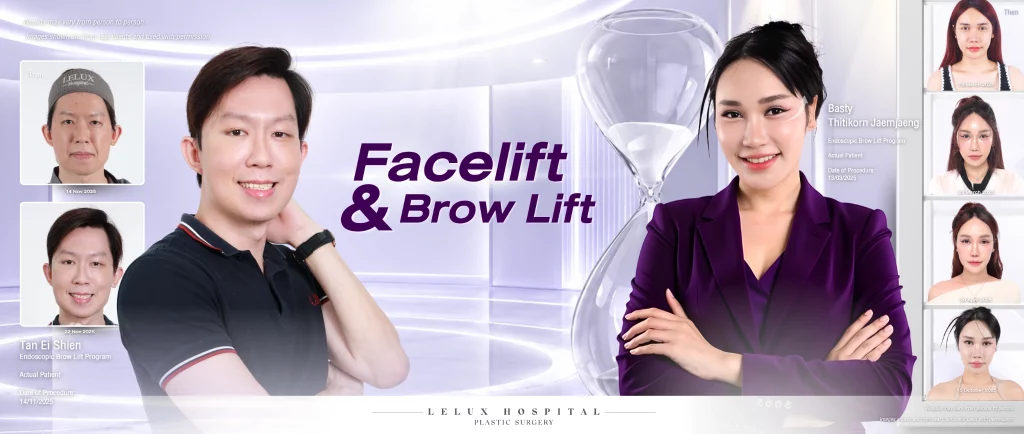
Facelift surgery is a surgical procedure designed to address sagging skin and soft tissue of the face. The surgeon evaluates the degree of facial laxity and creates an individualized surgical plan to lift and reposition the tissues. Excess skin may also be removed when appropriate to help create a firmer appearance and improve facial definition.
Modern facelift surgery is not limited to tightening the outer skin. Depending on the patient’s facial anatomy and concerns, deeper supporting structures, including the SMAS layer, may also be repositioned.
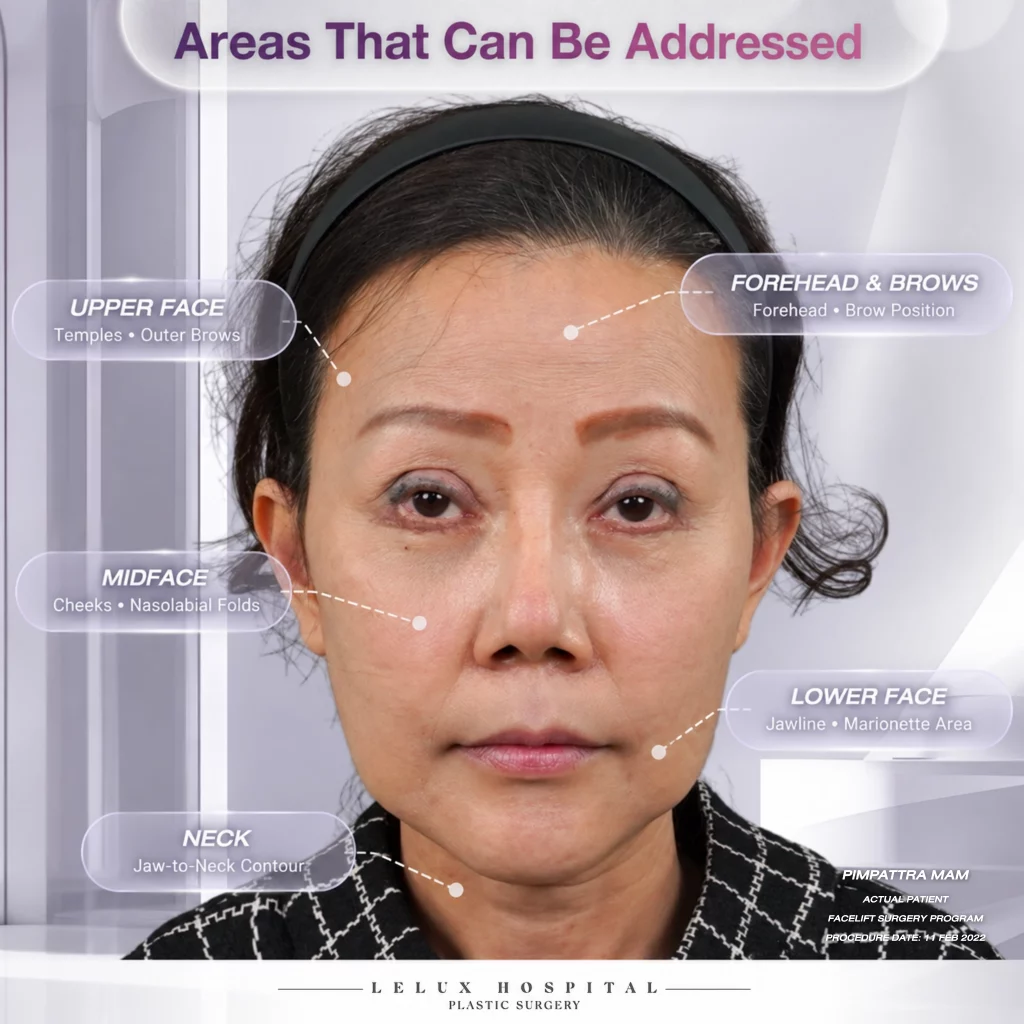
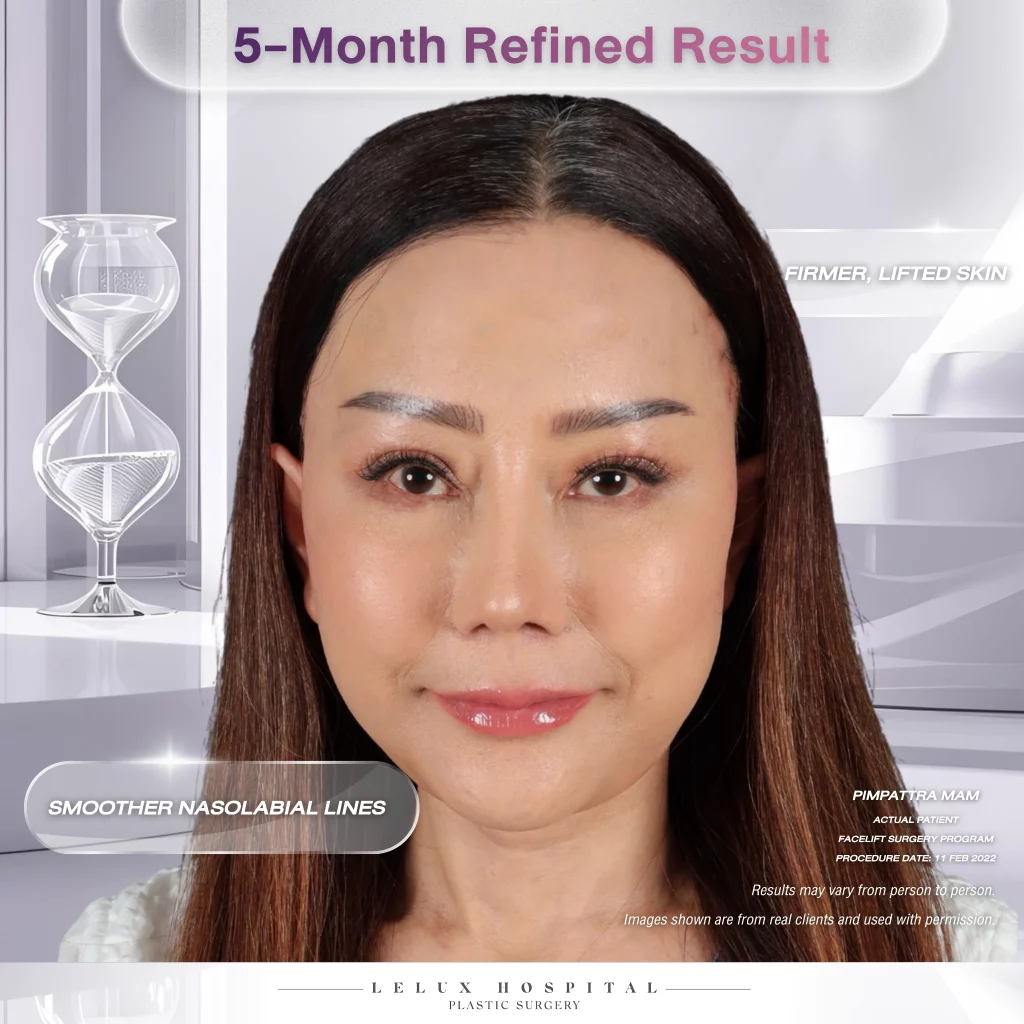
At Lelux Hospital, facelift surgery is individually planned based on facial structure, degree of laxity, and treatment area.
The Deep Locking™ Facelift approach focuses on repositioning both the skin and deeper supporting tissues rather than tightening the surface alone.
Tailored to individual facial anatomy.
Addresses supporting structures beneath the surface.
Planned according to the location of facial laxity.
The SMAS — Superficial Musculoaponeurotic System — is a fibrous supporting layer beneath the skin and superficial fat.
It is connected with the facial muscles and overlying tissues, making it an important structure in facelift surgery. Repositioning the SMAS allows the surgeon to address facial laxity at a deeper structural level.
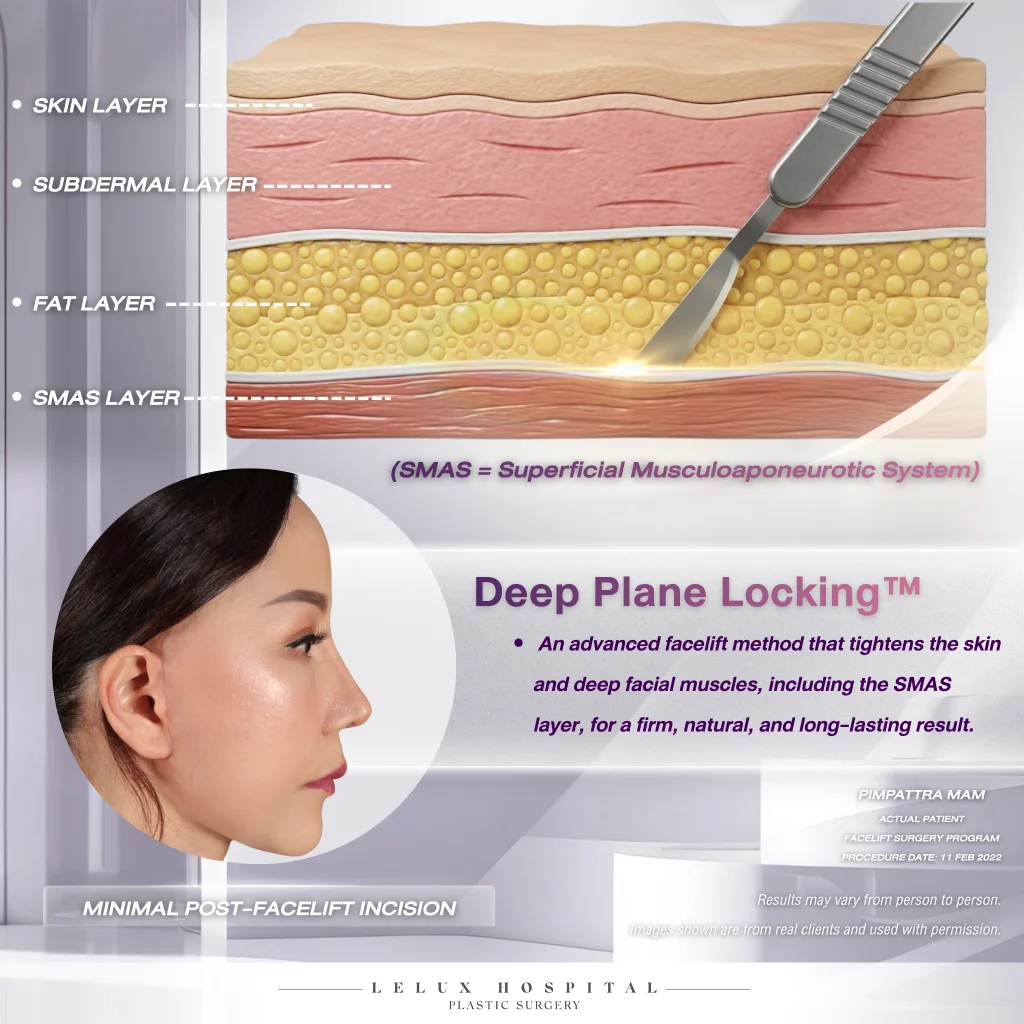
| Layer | Function | Description |
|---|---|---|
| 01 — Skin Layer | Surface Layer | The outermost layer of the face. |
| 02 — Subdermal Layer | Supporting Tissue Layer | Tissue located directly beneath the skin. |
| 03 — Fat Layer | Volume Layer | Provides facial volume and soft-tissue contour. |
| 04 — SMAS Layer | Structural Support Layer | A fibrous supporting layer associated with deeper facial structures. |
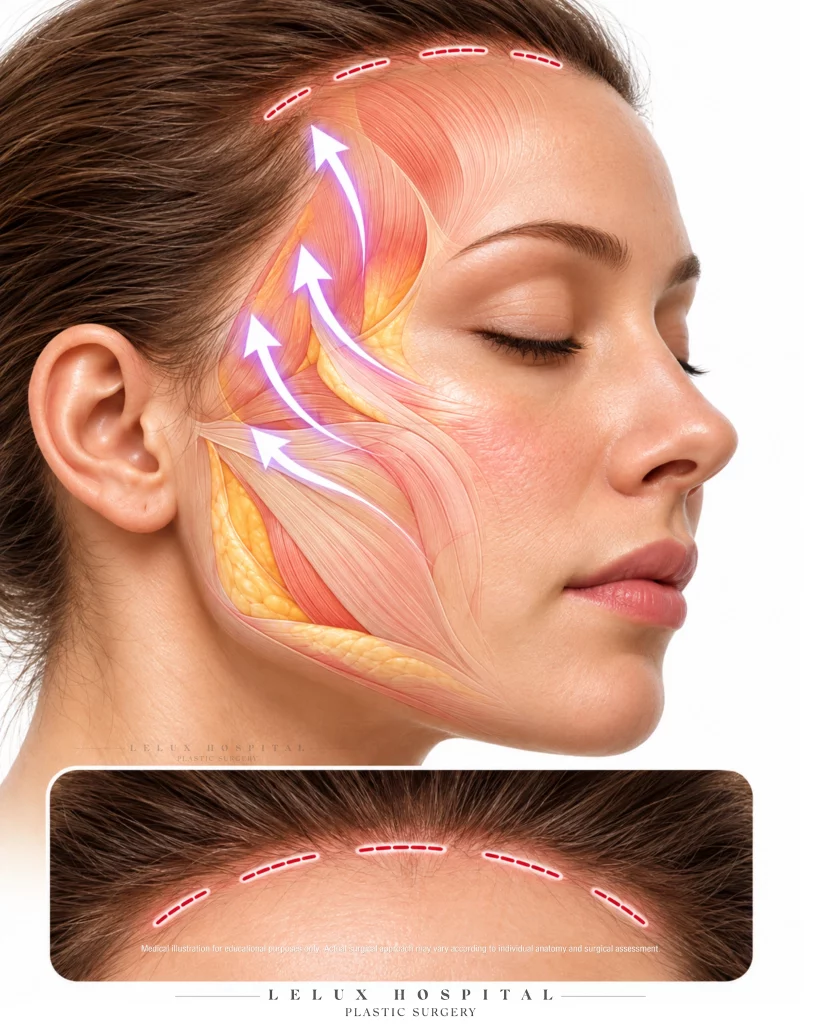
Approx. 5 small incisions concealed within the hairline
Upper Face • Temples • Outer Brow
Approximately five small incisions concealed within the hairline.
Incision locations and lifting direction are planned according to the patient’s facial structure and areas of concern.
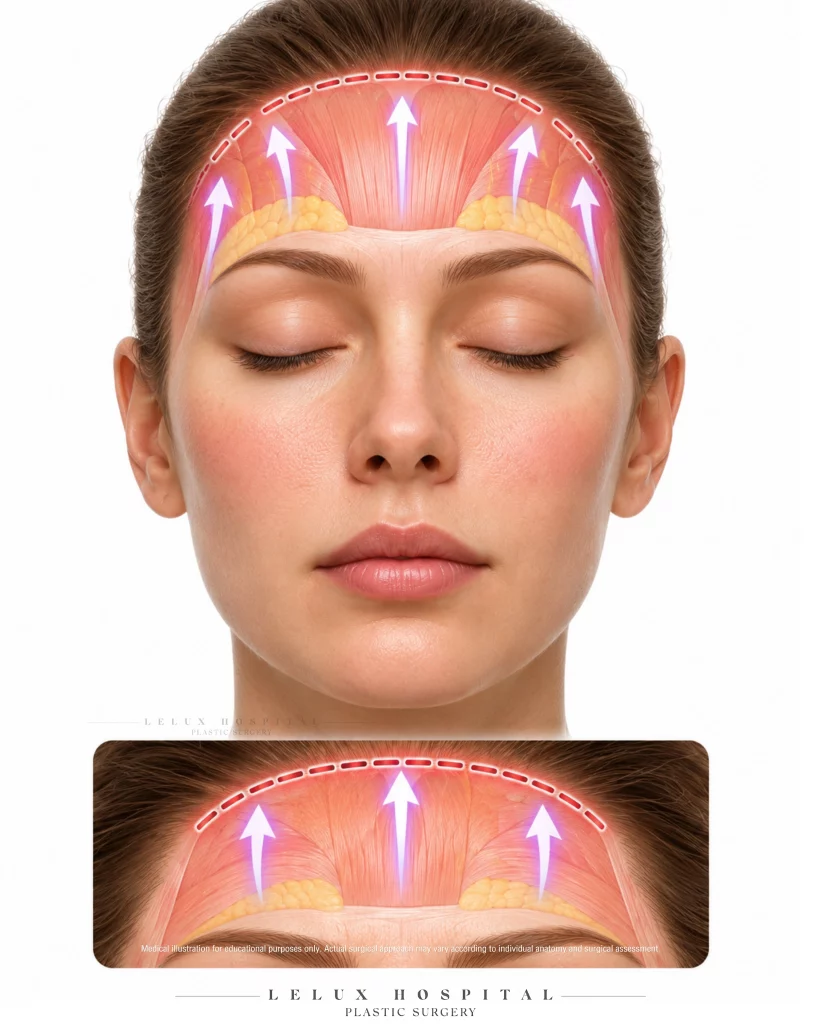
Deep tissue repositioning with strategic fixation.
The brow and forehead tissues may be lifted and secured to deeper supporting structures according to the patient’s anatomy and degree of laxity.
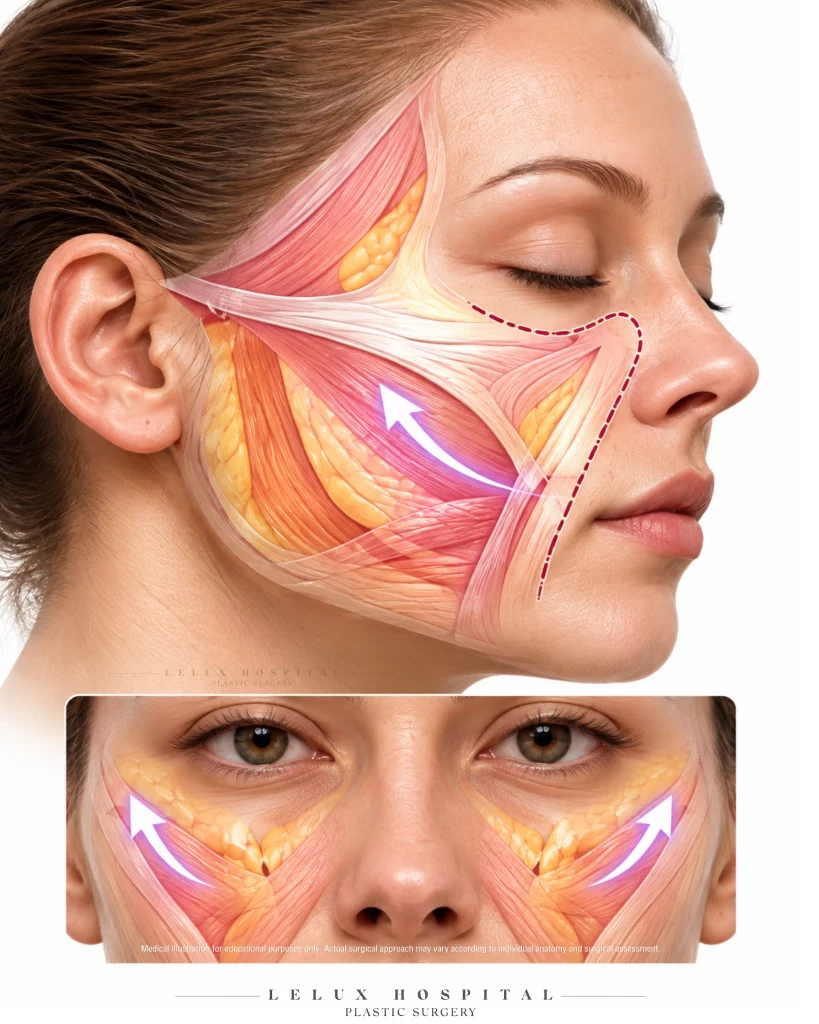
Midface • Cheeks • Nasolabial Folds
Targeted deep-tissue repositioning around the central face.
Because this region contains important anatomical structures and facial nerves, careful evaluation and precise surgical planning are essential.
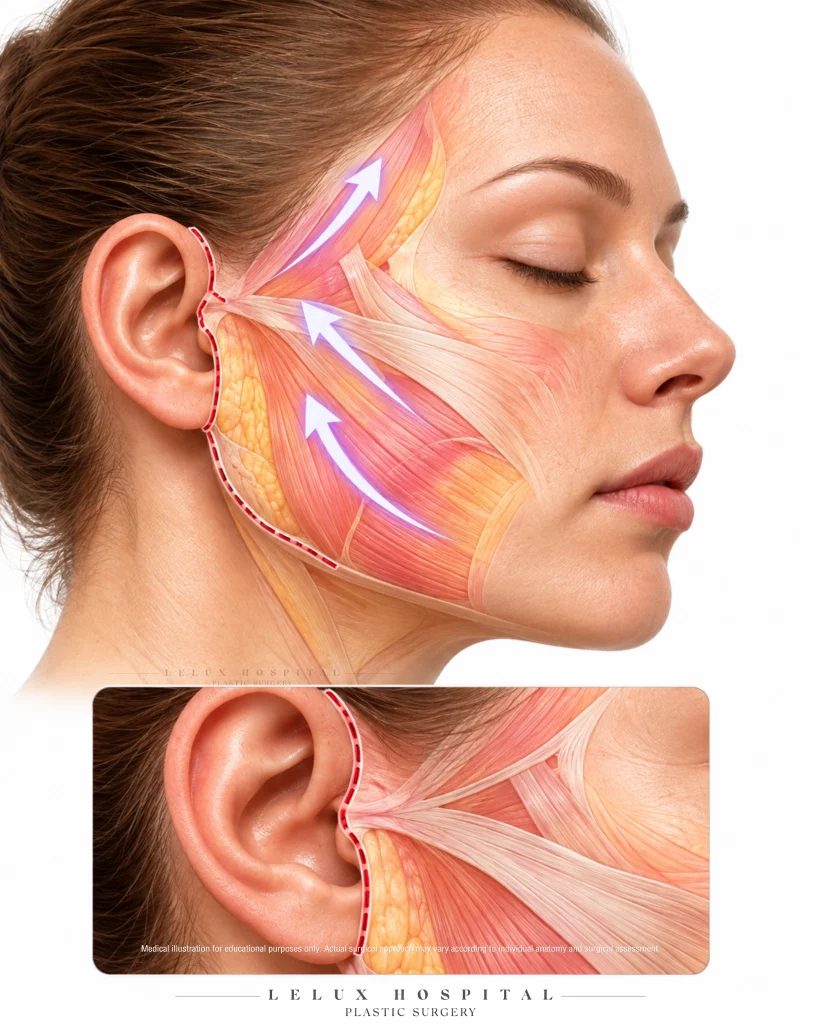
Along the preauricular area, in front of the ear.
Multi-layer tissue repositioning tailored to facial laxity.
Depending on facial structure and degree of laxity, the surgical plan may extend into deeper tissue planes when appropriate.
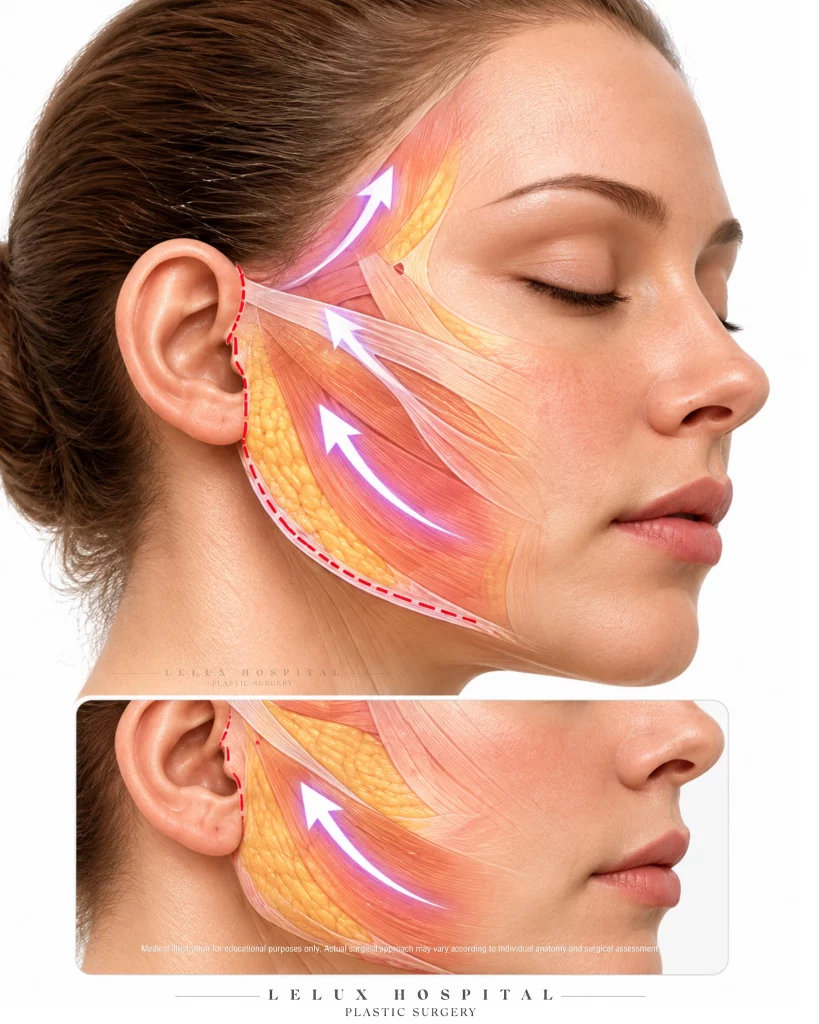
The illustrations above demonstrate how different facelift techniques may be used to address specific areas of facial laxity—from the upper face and brows to the midface, jawline, and lateral face.
At Lelux Hospital, the surgical approach is selected according to each patient’s facial anatomy, degree of tissue laxity, treatment area, and individual suitability. In some cases, more than one technique may be incorporated into the surgical plan to address multiple areas while maintaining balance with the patient’s natural facial structure.
Medical illustrations are for educational purposes only. Actual incision placement, tissue planes, and surgical techniques may vary according to individual anatomy and surgical assessment.
The fundamental principles of facelift surgery are similar for both men and women: lifting and repositioning lax skin and deeper supporting tissues to improve facial contour.
However, surgical planning may differ according to individual anatomical characteristics. In male patients, factors such as skin thickness, beard-bearing skin, sideburn position, and changes in the hairline can influence incision placement and the direction of tissue repositioning. These considerations are particularly important around the ear and hairline to help avoid moving hair-bearing skin into an unnatural position.
For both men and women, the surgeon also considers facial proportions, jawline structure, tissue quality, and the patient’s preferred aesthetic outcome. The goal is not to create the same facial shape for every patient, but to plan the procedure around the individual’s natural features.
Facial Structure • Skin Quality • Hairline • Facial Hair • Degree of Laxity • Treatment Goals
At Lelux Hospital, these factors are evaluated before determining the lifting direction, incision placement, and appropriate facelift technique.
01 — Improved Facial Contour
Facelift surgery can address sagging skin, jowls, deeper facial folds, and laxity affecting the cheeks, jawline, and neck. Deeper supporting tissues may also be repositioned as part of the surgical plan.
02 — Long-Lasting Rejuvenation
Facelift results are designed to be long-lasting. Clinical guidance commonly describes results lasting approximately 5–10 years, although longevity varies according to age, skin elasticity, anatomy, lifestyle, and the surgical technique used.
A facelift does not stop the natural aging process, so facial tissues will continue to change over time.
03 — Strategically Planned Incisions
Facelift incisions are generally positioned around natural facial contours and the hairline according to the selected technique.
Once healed, incision lines may become less noticeable, although scar appearance and healing vary between individuals.
04 — Multiple Areas Can Be Addressed
Depending on the patient’s concerns, facelift surgery can be planned to address several areas within the same surgical plan, including the cheeks, lower face, jawline, and neck.
The extent of surgery is individually determined according to the location and degree of facial laxity.
Facelift surgery is an invasive surgical procedure and, like all surgery, involves potential risks and a recovery period.
Possible risks may include swelling, bruising, bleeding or hematoma, infection, changes in skin sensation, wound-healing problems, scarring, temporary or permanent hair loss around an incision, facial nerve injury, and anesthesia-related complications. Individual risk varies according to health status, surgical technique, and other factors.
Facelift surgery should be performed with appropriate surgical assessment, qualified medical personnel, and suitable operating-room standards.
At Lelux Hospital, the surgical setting includes operating-room facilities with HEPA filtration, modern medical equipment, and a surgical team experienced in plastic surgery. The surgical plan and appropriate level of care are determined according to each patient’s medical condition and procedure.
Follow-Up Care Matters
Following the surgeon’s postoperative instructions is an important part of recovery.
Proper wound care, scheduled follow-up appointments, activity restrictions, and monitoring for unusual symptoms can help reduce avoidable complications and support appropriate healing.
Proper preparation begins with an individualized consultation and medical assessment.
01 — Consultation with the Surgeon
Discuss your concerns, medical history, facial anatomy, expected outcome, and the facelift approach that may be appropriate for you.
02 — Preoperative Health Assessment
Laboratory testing or other medical evaluations may be recommended before surgery depending on your health history and planned procedure.
03 — Review Medications & Supplements
Tell your surgeon about all prescription medications, over-the-counter medicines, vitamins, herbal products, and dietary supplements you use.
Some medications or supplements may need to be adjusted or temporarily stopped because they can affect bleeding or recovery. Do not stop prescribed medication unless instructed by your doctor.
04 — Avoid Smoking & Follow Preoperative Instructions
Patients may be advised to stop smoking and avoid certain medicines such as aspirin, anti-inflammatory drugs, or herbal supplements before surgery when medically appropriate.
05 — Prepare for Recovery
Plan adequate time away from work and strenuous activities. Arrange transportation after surgery and, when recommended, have someone stay with you during the initial recovery period.
06 — Set Realistic Expectations
Understanding the expected recovery process, potential limitations, and individual variability in results is an important part of preparing for facelift surgery.
Every face has different proportions, tissue characteristics, and patterns of aging.
At Lelux Hospital, facelift planning begins with an assessment of the patient’s facial structure and areas of concern before determining the appropriate technique, tissue level, lifting direction, and incision placement.
The appropriate facelift approach is determined individually after consultation with the surgeon.