
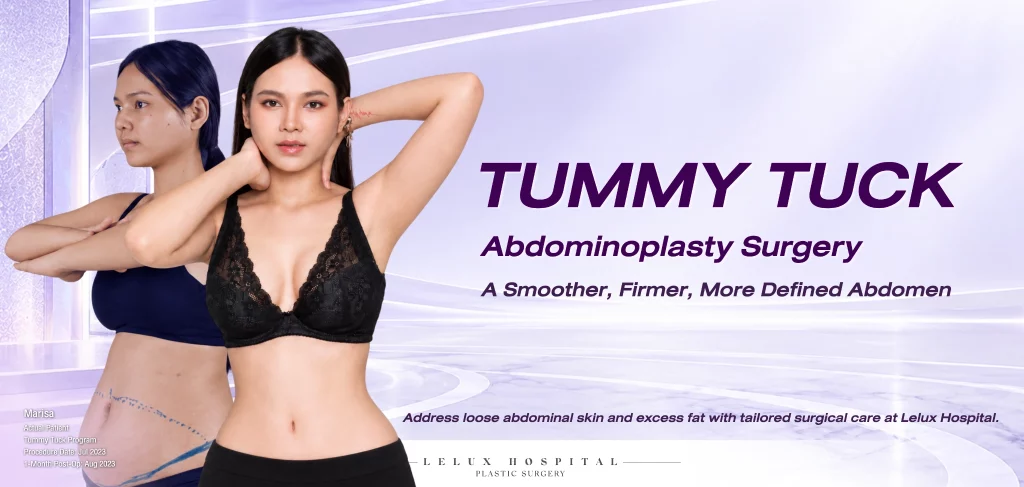
A tummy tuck, medically known as abdominoplasty, is a surgical procedure designed to remove excess abdominal skin and fat while improving the overall contour of the abdomen.
Pregnancy, significant weight changes and aging can cause skin to stretch and lose elasticity. In some cases, it may not fully return to its previous firmness, even with regular exercise and a healthy lifestyle. The procedure may also include repair of separated abdominal muscles when clinically indicated. At Lelux Hospital, surgical planning is considered according to each patient’s anatomy, concerns and treatment goals.
Excess or sagging abdominal skin that remains after childbirth.
Suitable candidates are generally in good health, have a stable body weight and realistic expectations. Individual assessment is essential.
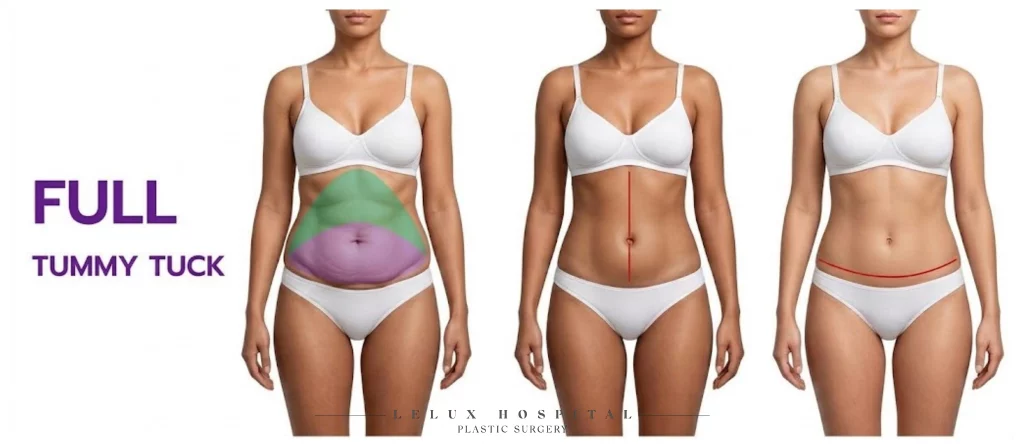
Illustration: A general representation of the treatment area and typical incision placement in a full tummy tuck. Actual surgical technique, incision location and outcomes vary between patients. Diagram for educational purposes only.
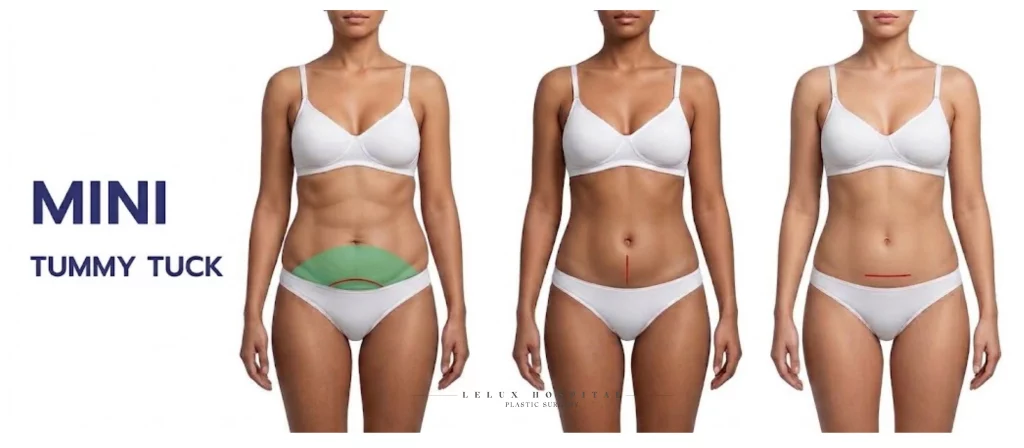
Illustration: A general representation of the treatment area and typical incision placement in a full tummy tuck. Actual surgical technique, incision location and outcomes vary between patients. Diagram for educational purposes only.
Neither technique is inherently better. An individual examination is required to determine which approach may be appropriate.
Preparation is part of the treatment plan. The medical team will review your health, medications, previous procedures and factors that may affect
surgery or recovery.
Important: Do not stop prescribed medication on your own. Any changes should be discussed with your surgeon or prescribing physician.
Recovery varies between patients and depends on the extent of surgery, abdominal wall tightening, individual healing and whether additional
procedures are performed.
Follow dressing, wound and drain-care instructions provided by the medical team.
Gentle walking may be encouraged. A slightly flexed posture may be recommended early in recovery.
Return to daily activity gradually and avoid strenuous exercise or heavy lifting until cleared.
A compression garment may be recommended to support the abdomen and help manage swelling.
Swelling, tightness and soreness may be more noticeable.
Daily movement can usually increase as healing progresses.
Swelling decreases and the abdominal tissues gradually settle.
The contour and surgical scars continue to mature over time.
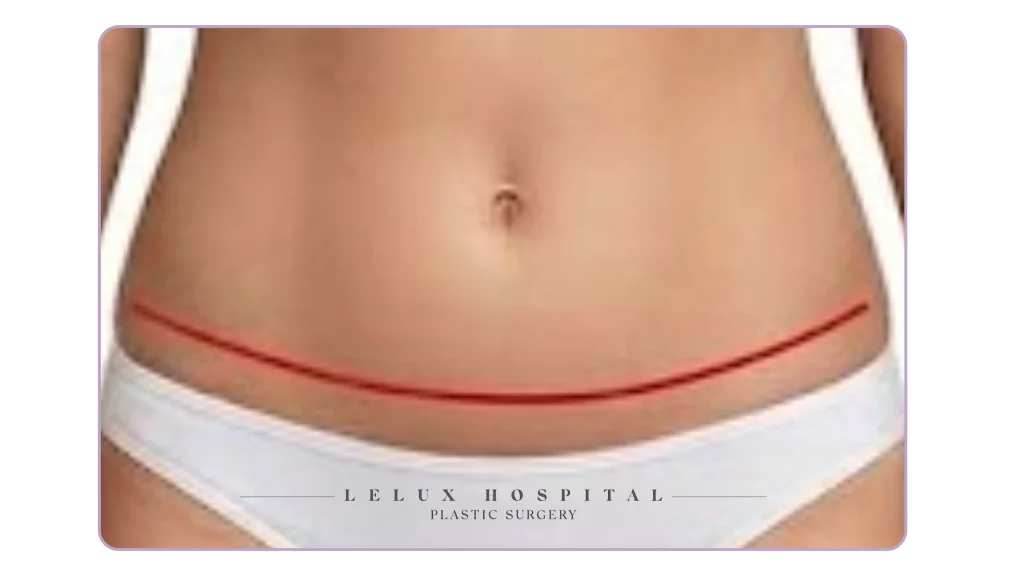
Usually positioned low across the abdomen.
Scar color, firmness and texture change gradually over time.
Silicone products, topical care or other methods may be recommended after sufficient healing.
Possible complications may include bleeding, infection, fluid
accumulation or seroma, swelling, bruising, delayed wound
healing, scarring, changes in sensation, asymmetry, blood clots or
the possibility of additional treatment.
Severe or increasing pain, excessive bleeding, fever, unusual
wound discharge, rapidly increasing swelling, difficulty breathing,
chest pain or leg swelling develops.
Assessment of abdominal anatomy, skincondition,
abdominal wall, medicalhistory and treatment goals.
Postoperative instructions and follow-up based
onthe procedure and individual recovery.
Atummy tuck may be considered for adults with persistent loose or excess abdominal skin, changes following pregnancy or significant weight loss,
or abdominal muscle separation whenclinically appropriate.Anindividual assessment is required.
Atummy tuck primarily addresses excess abdominal skinand may improve abdominal contour. Whenappropriate, abdominal wall tightening may also
be performed. It isnot intended as a weight-loss procedure.
Atummy tuck primarily addresses excess skinand abdominal wall changes, while liposuctionprimarily removes selected areas of subcutaneous fat. In
some patients, the procedures may be combined whenappropriate.
Recovery varies according to the extent of surgery and individualhealing. Discomfort and limited movement may be morenoticeable early on. Normal
daily activity is gradually increased over the following weeks, while strenuous exercise and heavy lifting should only resume after clearance from the
surgeon.
Postoperative care may include wound and draincare, prescribed medication, gentle walking, compressiongarments whenrecommended, temporary
activity restrictions and scheduled follow-up appointments.
No surgical scar canbe guaranteed to disappear completely. It typically changes and becomes lessnoticeable as it matures, but appearance varies with
skincharacteristics, genetics, wound healing and postoperative care.
Tissues removed during surgery donot simply regenerate, but future weight gain, weight loss, pregnancy, aging and changes inskinelasticity canalter
the abdominal contour over time.
The choice depends on where loose skinis located, how much correctionis required, the abdominal wall conditionand whether the belly buttonneeds to
be repositioned. The technique should be selected after examinationby a plastic surgeon.