

Breast shape can change over time due to pregnancy, breastfeeding-related changes, aging, weight fluctuations, changes in skin elasticity, and natural differences in breast structure. These changes may cause the breasts to sit lower than before, lose firmness or upper-breast fullness, or become uneven in shape or position.
For some patients, these changes may also include stretched skin, enlarged areolas, downward-pointing nipples, or noticeable breast asymmetry. While these concerns are a normal part of changes in the body, they may affect how some individuals feel about their overall breast contour and body proportions.
Breast Lift Surgery, also known as Mastopexy, is a surgical procedure designed to reshape and reposition the breasts by removing excess skin and supporting the remaining breast tissue. The goal is to create a firmer, more elevated, and better-balanced breast contour that is appropriate for the patient’s individual anatomy.
At Lelux Hospital, each breast lift procedure is carefully planned according to breast structure, skin condition, nipple position, degree of sagging, body proportions, and the patient’s personal aesthetic goals.
Breast Lift Surgery is performed to improve breast position and contour when the breasts have become lower, less firm, or less defined over time.
Rather than simply increasing breast size, the procedure primarily focuses on improving the position, shape, and support of the existing breast tissue. Excess skin may be removed, the breast tissue may be reshaped, and the nipple and areola may be repositioned when appropriate.
The specific surgical technique and incision pattern may vary depending on the degree of breast sagging, skin elasticity, breast volume, nipple position, and the desired outcome.

Breast lift surgery may be considered for patients with concerns such as:
The suitability of breast lift surgery depe
A breast lift is not simply about raising the position of the breasts.
A well-planned procedure considers shape, proportion, support, and symmetry as a whole to create a breast contour that is appropriate for each patient’s natural anatomy.
| Breast Structure | Shape & Proportion | Breast Position: How low the breast tissue sits on the chest | Breast Shape: Overall contour and distribution of breast tissue |
|---|---|
| Nipple & Areola Position: Position, direction, and proportion of the nipple-areola complex | Breast Symmetry: Differences in shape, height, or volume between both breasts |
| Skin Elasticity: Degree of skin laxity and ability of the skin to support the breast | Breast Volume: Existing breast tissue and desired level of fullness |
| Chest Structure: Chest width, breast base, and body frame | Overall Body Proportion: How the breast contour relates to the patient's natural figure |
The goal is not simply to lift the breasts higher, but to create a more supported, balanced, and proportionate breast contour.
Because every patient has a different breast structure and degree of sagging, the surgical technique should be selected individually rather than applying the same approach to everyone.
At Lelux Hospital, breast lift surgery is planned individually based on the patient’s anatomy, breast condition, and aesthetic goals.
Before determining the surgical approach, the surgeon evaluates several key factors:
| Assessment | Why It Matters | Existing Breast Volume | Existing Breast Volume |
|---|---|
| Degree of Sagging | Influences the lifting technique and amount of correction required |
| Excess Skin | Helps determine how much skin may need to be removed |
| Skin & Tissue Quality | Affects surgical planning and breast support |
| Nipple & Areola Position | Helps determine whether repositioning may be appropriate |
| Breast Asymmetry | Allows differences between both breasts to be considered during planning |
| Chest Width & Body Proportion | Helps create a breast contour that is balanced with the patient's frame |
| Desired Shape & Volume | Guides the overall surgical plan according to the patient's goals |
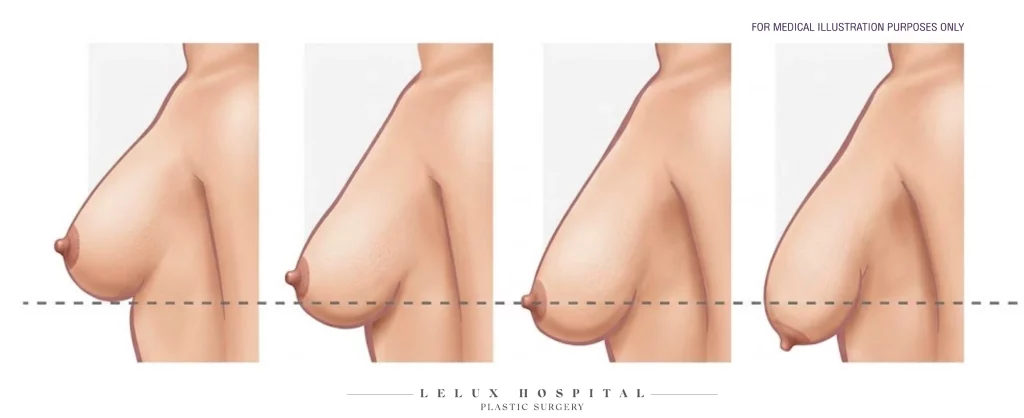
| NORMAL | GRADE 1: Mild Ptosis | GRADE 2: Moderate Ptosis | GRADE 3: Severe Ptosis | Nipple above the inframammary fold. | Nipple at approximately the level of the inframammary fold. | Nipple below the fold but above the lowest breast contour. | Nipple below the fold and at or near the lowest point of the breast. |
|---|
There is no single incision pattern that is appropriate for every patient. The surgical approach is selected according to breast shape, degree of ptosis, skin elasticity, excess skin and the extent of reshaping required.
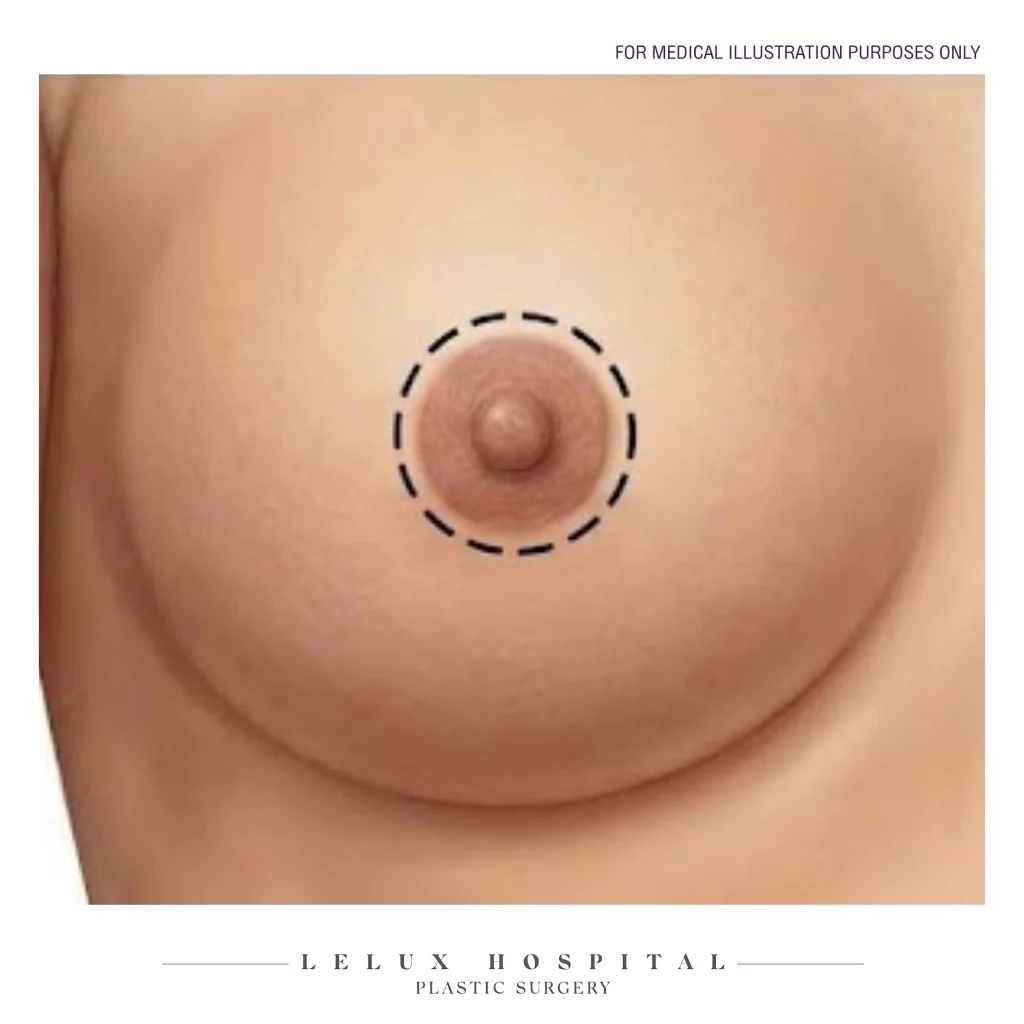
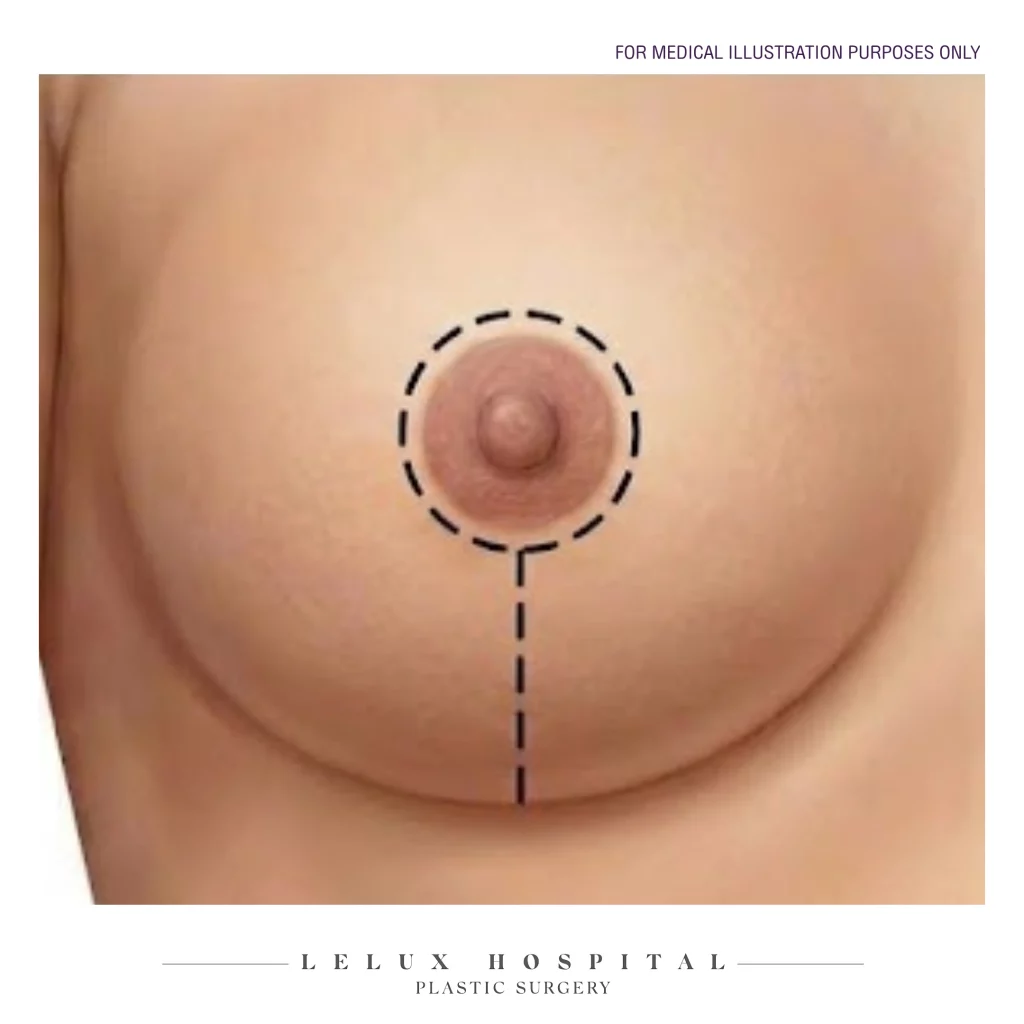
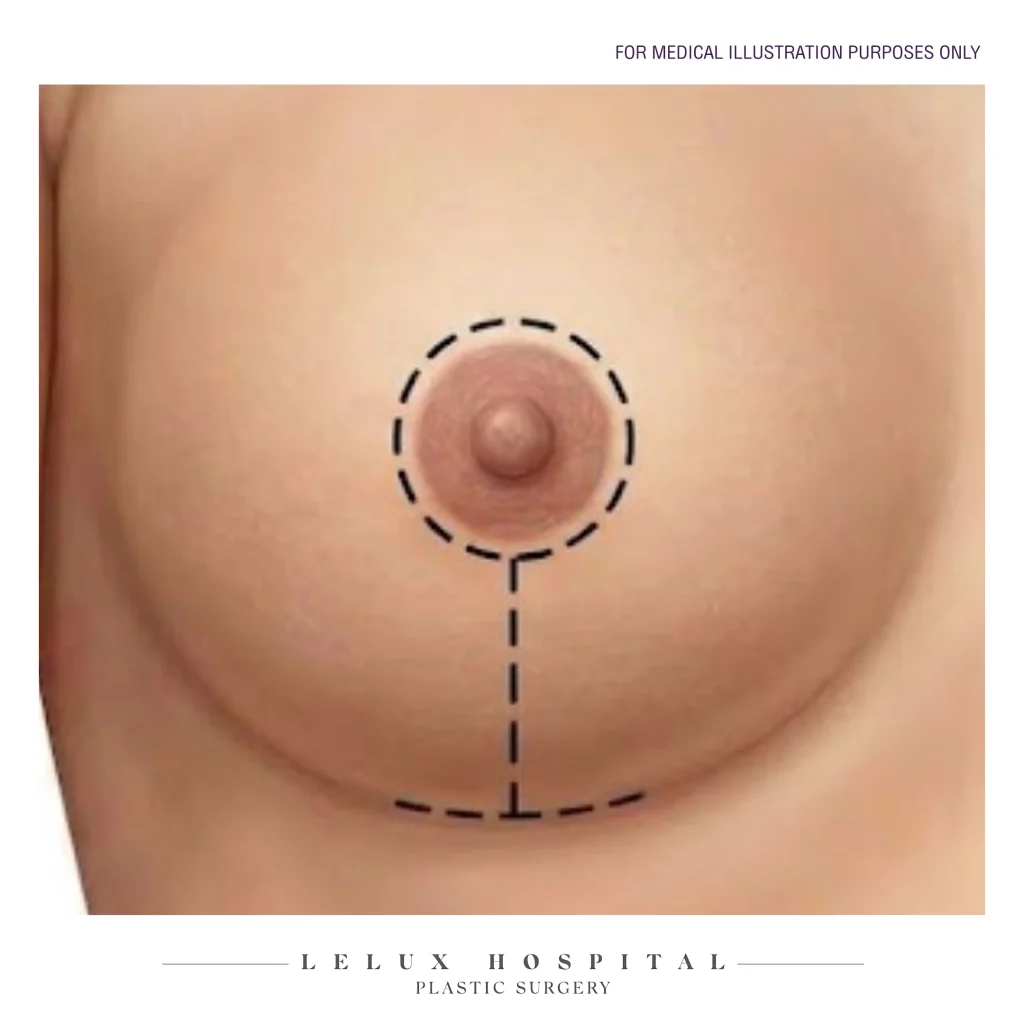
The incision pattern is selected individually. The degree of ptosis alone does not determine the appropriate technique.
Primarily focuses on:
May be considered when:
Breast ptosis is accompanied by loss of volume or when additional fullness is part of the patient’s treatment goal.
Degree of Ptosis → Excess Skin → Breast Volume → Nipple Position → Skin Elasticity → Desired Shape & Volume
Before breast lift surgery, the medical team will provide instructions based on your health, surgical plan, and type of anesthesia. Preparation may include:
Preoperative requirements may vary between patients. Always follow the instructions provided by your surgeon and medical team.
Recovery after breast lift surgery varies from person to person and may also depend on whether breast augmentation is performed at the same time. During the early recovery period, temporary swelling, tightness, soreness, bruising or changes in breast sensation are common.
Patients may be advised to:
The timing for returning to work, exercise, driving, and other activities should be determined individually by the treating surgeon.
Breast shape continues to change during recovery. In the early stages, the breasts may appear swollen, feel firmer than expected, or sit higher than their eventual position. As swelling decreases and the tissues gradually settle, the breast contour may continue to change.
For this reason, the final appearance should be evaluated after an appropriate healing period rather than immediately after surgery.
The appearance of scars may vary depending on:
Scar gels, silicone products, massage, or other scar-management methods should only be started once the incision has healed sufficiently and when recommended by the medical team.
Patients undergoing Breast Lift with Augmentation may receive additional postoperative instructions related to the implant and implant pocket.
These may include guidance regarding:
Postoperative instructions may differ depending on the implant, surgical technique, and individual anatomy.
Breast or implant massage should only be performed when specifically recommended by the treating surgeon.
Follow-up appointments are an important part of recovery.
Incision Healing → Swelling → Breast Position → Symmetry → Overall Recovery
Breast lift surgery is a surgical procedure and involves potential risks and individual considerations. Suitability, expected outcomes, recovery, and possible complications should be discussed with a plastic surgeon during consultation.
Results may vary from person to person.