
Facial aging is not limited to wrinkles on the surface of the skin. Over time, changes can occur in the skin, fat, and deeper supporting structures of the face, contributing to sagging cheeks, jowls, deeper facial folds, and reduced definition around the jawline.
For patients considering facelift surgery in Thailand, seeing a treatment journey can help explain what surgical facial rejuvenation is designed to address—and why the procedure needs to be planned individually.
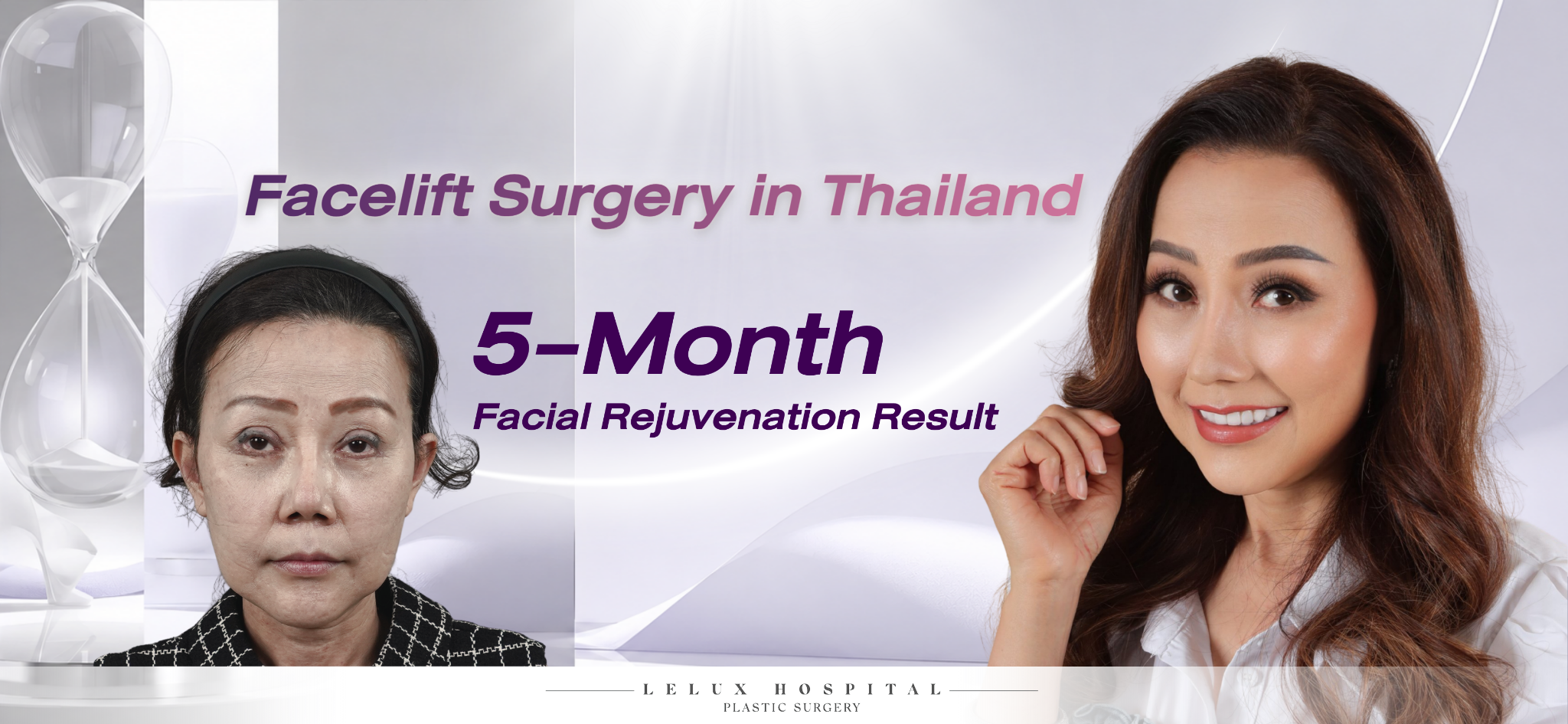
This case review follows a patient from her initial facial condition to a 5-month follow-up, highlighting the concerns identified before surgery, the role of deeper facial support such as the SMAS layer, and the gradual refinement that can occur during recovery.
The images presented are from an individual case. Results vary from person to person and should not be considered a guarantee of outcome.
Initial Condition: Understanding the Facial Aging Pattern
Before deciding on a facelift, the first step is not simply identifying wrinkles. The surgeon evaluates how different areas of the face have changed and how those changes relate to one another.
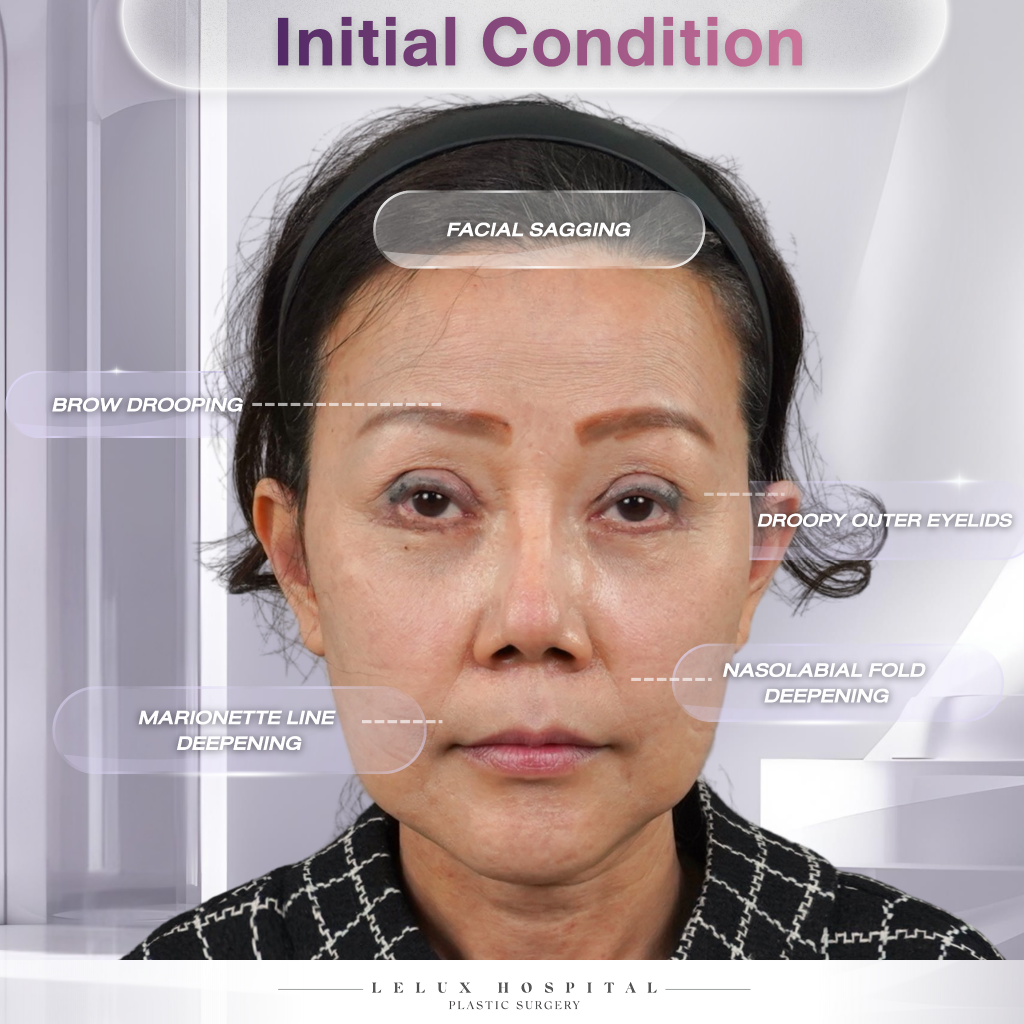
In the pre-treatment images of this case, several visible concerns were identified:
- General facial tissue sagging
- Reduced definition through the mid and lower face
- Deepening of the nasolabial folds
- More visible marionette lines around the mouth
- Changes around the brow and outer eyelid area
These concerns can occur as facial tissues gradually lose elasticity and deeper structures descend with age. Factors such as skin quality, loss or redistribution of facial fat, genetics, sun exposure, smoking, and natural aging may all contribute to changes in facial contour.
It is important to distinguish between different areas of facial aging. A facelift primarily addresses tissue laxity in the face and, depending on the technique, the neck. Brow drooping and eyelid laxity are not necessarily corrected by facelift surgery alone and may require separate evaluation for procedures such as a brow lift or eyelid surgery.
Treatment Goal: Lift Without Changing Facial Identity
For this case, the objective was not to create a different face or an excessively tight appearance.
The treatment concept focused on improving facial support and creating a more refined contour while maintaining the patient’s recognizable facial characteristics.
Potential treatment goals included:
- Improving sagging in the mid-to-lower face
- Supporting a more defined facial contour
- Softening the appearance of deeper facial folds
- Improving definition around the lower face and jawline
- Creating a refreshed appearance without excessive skin tension
Modern facelift surgery may involve repositioning deeper supporting tissues rather than relying only on pulling the skin. Lelux Hospital lists High Extended SMAS Face and Neck Lift among its facelift procedures, which is intended to address sagging involving the mid-to-lower face and neck.
The exact surgical approach, however, should be selected according to each patient’s anatomy rather than based on a single technique for everyone.
Why the SMAS Layer Matters in Facelift Surgery
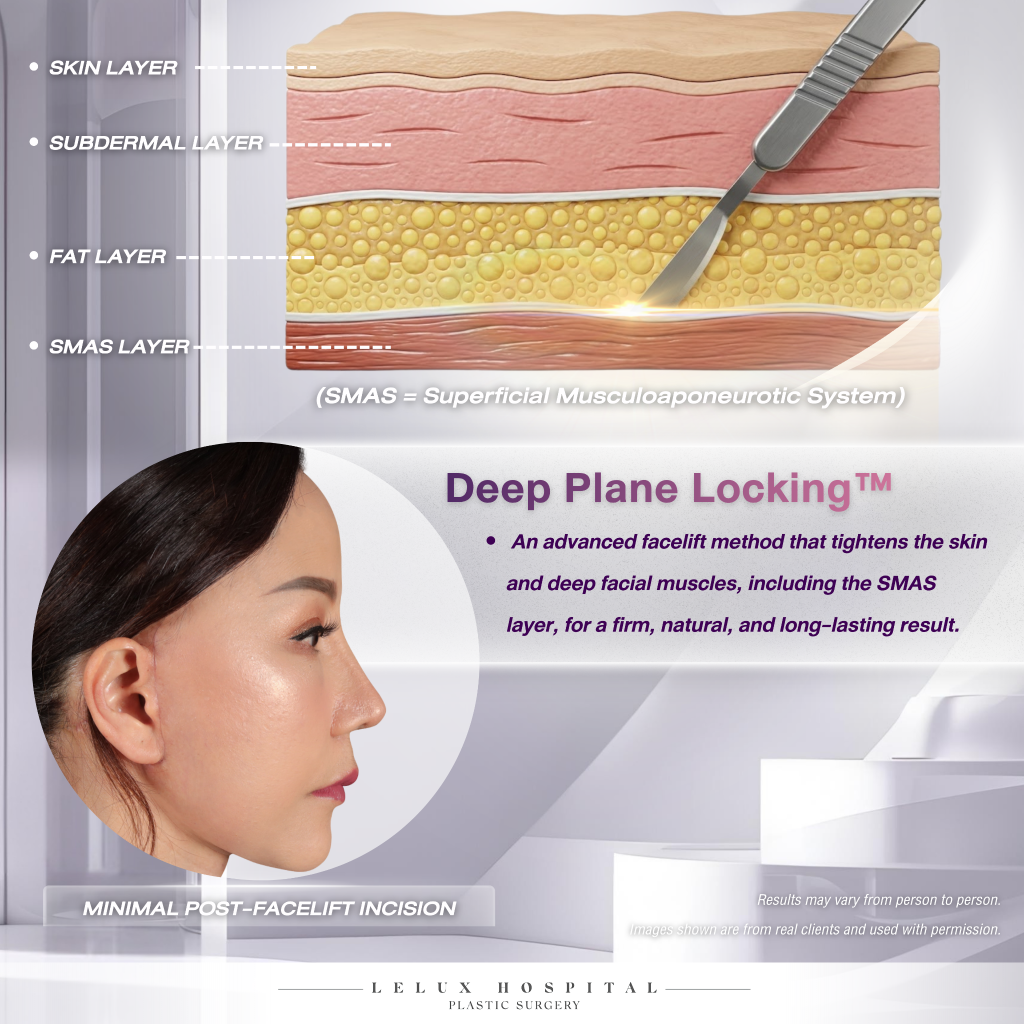
To understand modern facelift surgery, it is helpful to look beneath the surface of the face.
The facial tissues can be simplified into several layers:
1. Skin
The outer layers of the skin provide protection and contribute to the visible texture and appearance of the face.
2. Subcutaneous Tissue and Facial Fat
Fat beneath the skin contributes to facial volume and contour. Aging can change both the amount and position of facial fat.
3. SMAS Layer
The SMAS, or Superficial Musculoaponeurotic System, is a deeper supporting layer beneath the skin and subcutaneous tissue.
It plays an important role in facial movement and structural support. For this reason, many surgical facelift techniques involve working with deeper tissues rather than tightening the skin alone.
A facelift can involve elevating the skin and repositioning underlying tissues before the skin is redraped. The precise depth and method vary according to the surgical technique and individual anatomy.
Skin-Only Tightening vs Deeper Facial Repositioning
A common misconception is that facelift surgery simply involves removing excess skin and pulling the remaining skin tighter.
In contemporary facial rejuvenation surgery, the treatment may involve deeper supporting tissues as well.
This distinction matters because facial aging occurs at multiple anatomical levels.
Depending on the patient, a surgeon may consider:
- Skin laxity
- Subcutaneous tissue
- Facial fat distribution
- SMAS support
- Jawline and neck contour
- Relationship between the midface and lower face
This deeper assessment allows surgical planning to focus on repositioning facial structures, with the skin subsequently redraped according to the new contour rather than relying on excessive tension at the skin surface.
Terms such as SMAS facelift, deep-plane facelift and other facelift techniques describe different surgical approaches. They are not interchangeable, and no single technique is automatically the best choice for every patient. The appropriate approach should be determined after examination by the surgeon.
The Surgical Planning Process
A facelift consultation should begin with a detailed assessment rather than selecting a procedure based only on age.
The surgeon may evaluate:
- Facial proportions
- Skin elasticity and thickness
- Amount and location of facial sagging
- Nasolabial and marionette folds
- Jowls and jawline definition
- Neck laxity
- Previous facial procedures
- Medical history
- Smoking status
- Current medications and supplements
- Patient expectations
A professional facelift consultation also includes discussion of treatment options, likely outcomes, anesthesia, recovery, risks, and potential complications.
This individualized planning is particularly important because two patients of the same age may have very different patterns of facial aging.
The Journey From Surgery to a 5-Month Refined Result
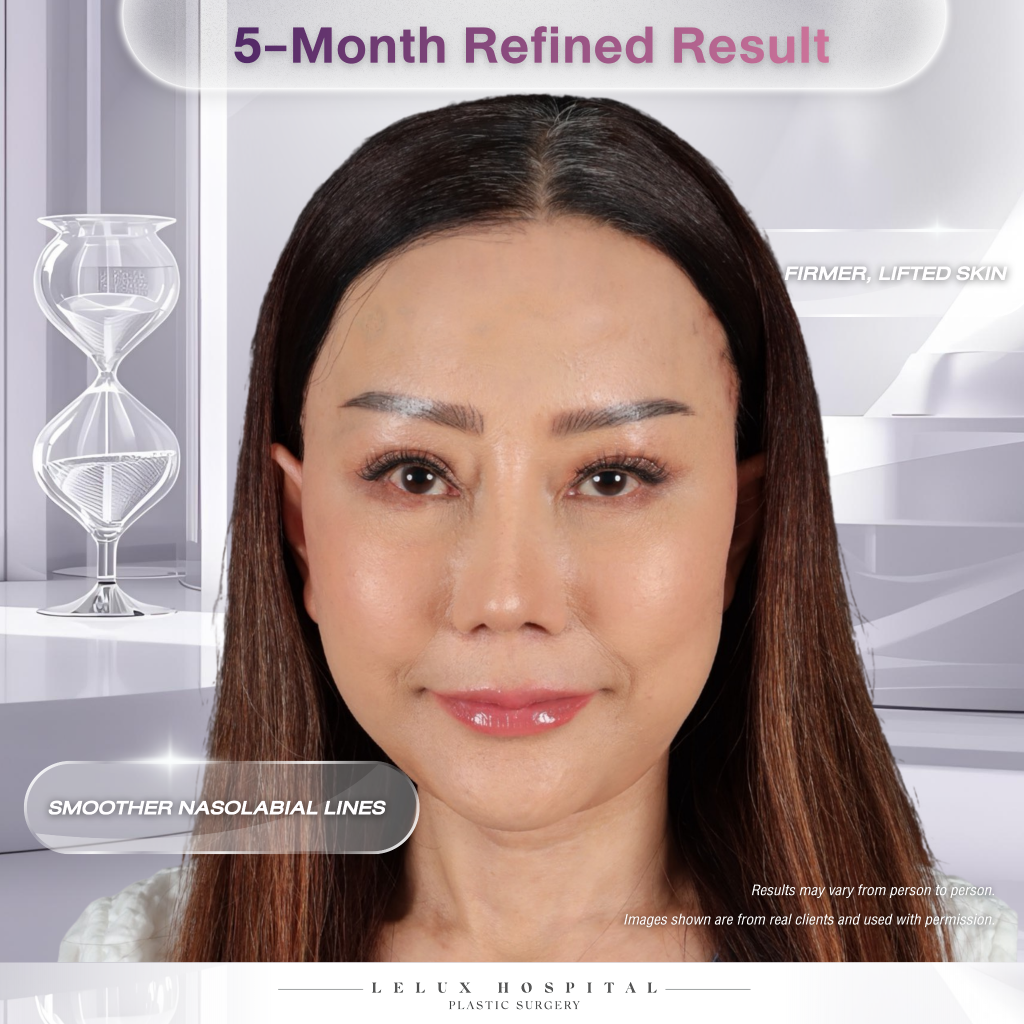
Facelift results do not appear immediately after surgery.
During the first stage of healing, swelling, bruising, tightness, and temporary changes in sensation may occur. These effects gradually improve as the tissues heal.
For this reason, evaluating facelift surgery only a few days after the procedure does not represent the final result.
Early Recovery
During the first days and weeks, patients may notice:
- Facial swelling
- Bruising
- Tightness
- Temporary numbness
- Changes around the incision areas
Patients receive specific instructions regarding wound care, medications, activity restrictions, and follow-up appointments.
Continued Refinement
As swelling decreases, facial contours gradually become easier to evaluate.
Many patients are able to return progressively to light activities during the early weeks, although recovery varies according to the extent of surgery and individual healing.
5-Month Follow-Up in This Case
At approximately five months after surgery, the accompanying follow-up image shows a more refined facial appearance compared with the initial condition.
Visible changes in this individual case include:
- A firmer overall facial contour
- A smoother appearance around the nasolabial area
- Improved appearance of facial tissue laxity
- A more refreshed overall facial presentation
By this stage, much of the early post-operative swelling would generally be expected to have improved, although scar maturation and subtle tissue changes can continue for several months.
These observations apply specifically to the case shown. The degree and timing of improvement are different for every patient.
What This Case Helps Explain About Facelift Surgery
The most important lesson from this case is that facelift surgery is not simply about making the skin tighter.
Successful treatment planning requires an understanding of where facial aging is occurring and which anatomical structures are contributing to the change.
A patient with significant lower-face laxity and jowls may require a different approach from someone whose primary concern is the upper face or eyelids.
Likewise, deeper nasolabial folds do not necessarily mean that the folds themselves should simply be “pulled away.” Facial volume, tissue descent, skin condition and surrounding anatomy all need to be considered.
This is why a personalized facial assessment is an important part of surgical planning.
Who May Consider This Type of Facelift?
A surgical facelift may be considered by adults who notice concerns such as:
- Sagging cheeks or lower facial tissues
- Jowls along the jawline
- Loss of jawline definition
- Loose facial or neck skin
- Deepening folds associated with tissue descent
- Facial aging that is more significant than they wish to address with temporary non-surgical treatments
Candidates should also be in suitable general health and have realistic expectations about surgery, scars, recovery, and results.
A facelift is not automatically recommended based on age alone. Facial anatomy and the actual pattern of aging are more important considerations when determining whether surgery is appropriate.
Incisions and Scars After Facelift Surgery
Incision placement varies depending on the surgical technique and areas being treated.
Facelift incisions are commonly planned around natural anatomical areas, such as the hairline and around the ear, so that the surgeon can access and reposition facial tissues.
However, every surgical incision creates a scar.
Rather than promising a “scarless facelift,” patients should understand that scars generally change and mature over time. Their final appearance depends on incision placement, surgical technique, skin characteristics, wound healing, and post-operative care.
Patients should follow their surgeon’s wound-care instructions carefully throughout recovery.
Safety Considerations
A facelift is a surgical procedure and carries potential risks.
Possible complications may include:
- Bleeding or hematoma
- Infection
- Fluid accumulation
- Temporary or persistent changes in skin sensation
- Facial nerve injury
- Poor wound healing
- Prolonged swelling
- Hair loss around incision areas
- Skin irregularities
- Anesthesia-related complications
- Need for additional treatment or revision
These risks should be discussed during consultation before deciding on surgery.
Lelux Hospital states that its surgical facilities use infection-control measures including HEPA filtration and positive-pressure systems.
Facility standards are only one component of surgical care. Surgeon assessment, anesthesia planning, appropriate patient selection, post-operative monitoring and patient compliance with recovery instructions are also important.
Facelift Surgery at Lelux Hospital Thailand
For international patients researching facelift surgery in Thailand, Lelux Hospital offers surgical facial rejuvenation options including High Extended SMAS Face and Neck Lift.
Treatment planning is based on an individual facial assessment rather than a standardized result.
Depending on the patient’s concerns, the consultation may consider:
- Midface sagging
- Lower-face laxity
- Jowls
- Jawline definition
- Neck laxity
- Skin quality
- Facial proportions
- Previous treatments
The recommended technique and extent of surgery should be confirmed after a direct medical evaluation.
Frequently Asked Questions
Is this a typical facelift result?
The images show the outcome of one individual patient. They can be useful for understanding the type of change that may be possible, but they cannot predict another patient’s outcome.
Facial anatomy, age, skin condition, surgical technique and healing response all influence the result.
Why is the 5-month result more useful than an immediate after photo?
Immediately after surgery, swelling and bruising can temporarily affect facial appearance. Evaluating a later follow-up gives the tissues more time to heal and the facial contour more time to settle.
Does facelift surgery treat brow drooping and eyelid sagging?
Not necessarily.
A facelift primarily treats aging changes involving the face and neck. Brow and eyelid concerns may require separate procedures after evaluation by the surgeon.
Does a SMAS facelift look more natural?
SMAS-based techniques work with deeper facial supporting tissues rather than relying solely on skin tension. However, a natural-looking result depends on multiple factors, including anatomy, surgical planning, technique and healing.
No specific facelift technique can guarantee a particular appearance.
How long does the result last?
Facelift surgery may produce improvements that remain visible for years, but surgery does not stop the natural aging process.
Longevity varies according to anatomy, surgical technique, skin quality, lifestyle and other individual factors.
A Personalized Approach to Facial Rejuvenation
The 5-month case shown in this article demonstrates how facial rejuvenation can evolve gradually after surgery—from identifying the original pattern of sagging to allowing deeper tissues and skin to settle during recovery.
Rather than focusing solely on tighter skin, modern facelift planning considers the relationship between facial anatomy, deeper supporting structures such as the SMAS, skin quality and individual facial proportions.
At Lelux Hospital in Thailand, international patients considering facelift surgery can undergo an individualized consultation to determine whether a facelift, face and neck lift, or another facial rejuvenation approach may be appropriate.
The photographs shown represent an individual patient’s experience. Results, recovery, scars and treatment recommendations vary from person to person. A medical consultation is required before surgery.