
Traveling from China to Thailand for Endoscopic Brow Lift Surgery
For international patients considering plastic surgery abroad, choosing a destination involves more than the procedure itself. Medical assessment, communication, recovery planning, follow-up care, and travel arrangements all form part of the treatment journey.
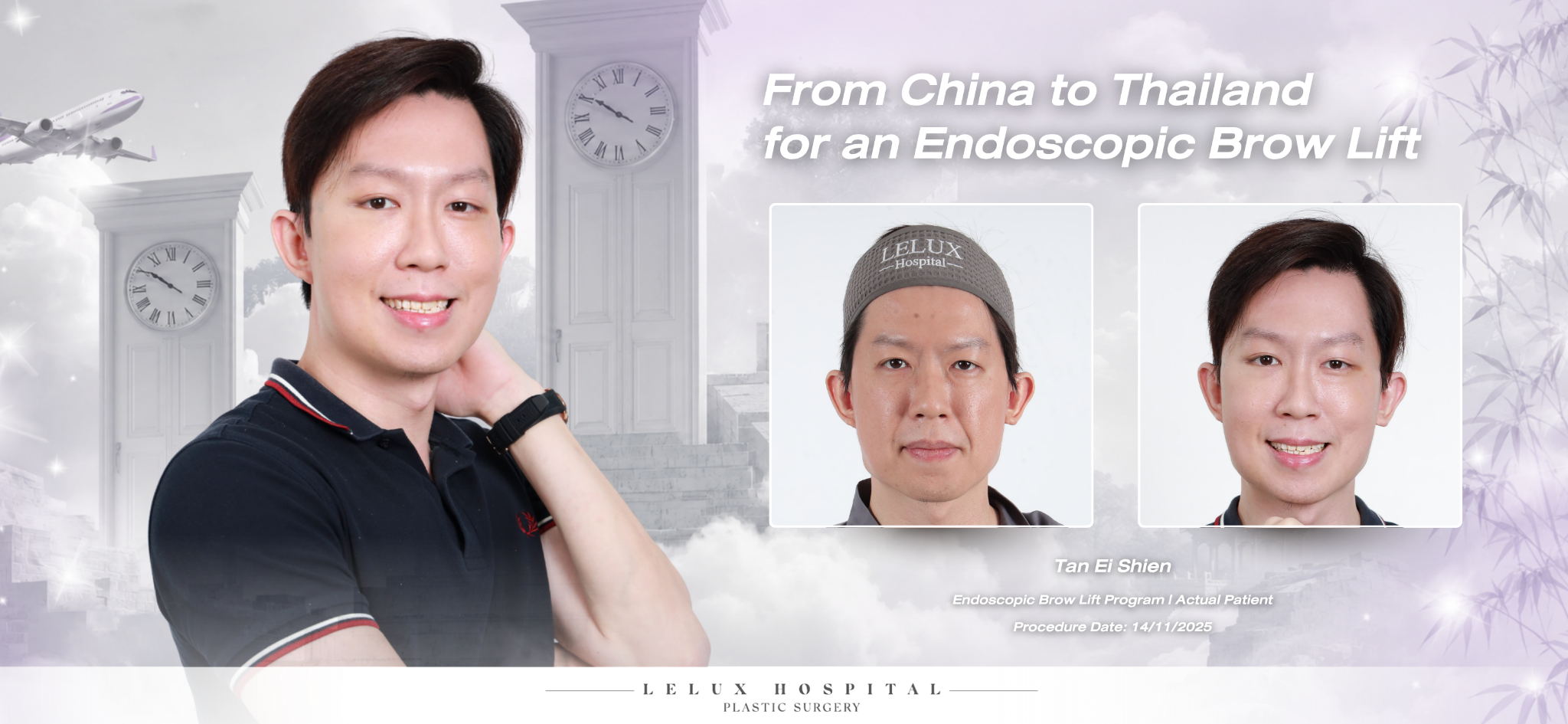
Tan Ei Shien, a male international patient from China, traveled to Thailand to undergo an Endoscopic Brow Lift Program at Lelux Hospital.
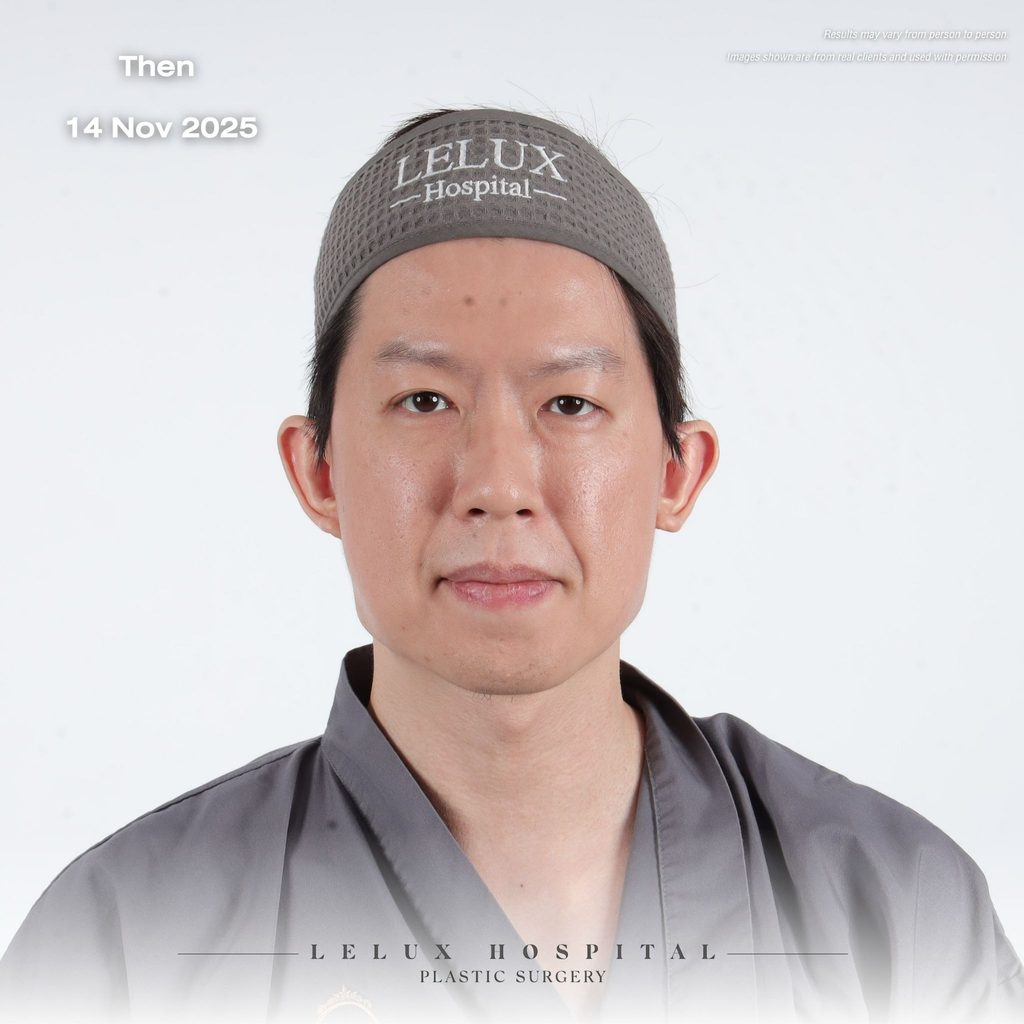
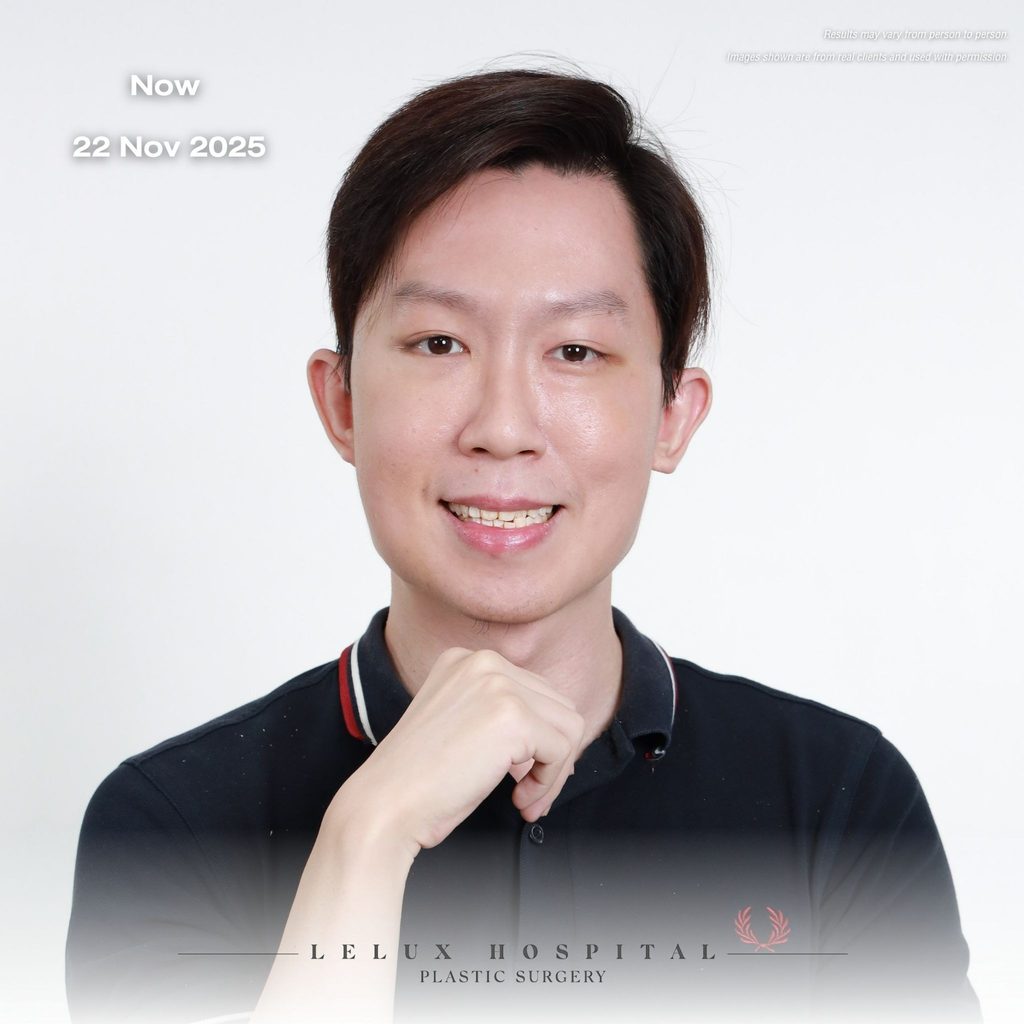
He underwent the procedure on 14 November 2025, with the accompanying case images documenting his appearance before treatment and again on 22 November 2025, approximately eight days later.
Rather than focusing only on a dramatic before-and-after transformation, this case offers an example of how upper-facial surgery can be planned around individual brow position, forehead anatomy, and overall facial balance.
Initial Concerns: Brow Position and Upper-Facial Balance
The position of the eyebrows can influence the overall appearance of the forehead and upper eye area.
Depending on individual anatomy, relatively low brow position or changes in forehead tissues may contribute to:
- Heaviness around the upper eye area
- A lower or less defined brow position
- Differences between the two brows
- A tired-looking upper facial expression
- Changes in the relationship between the brows, forehead, and eyes
For Tan Ei Shien’s case, the treatment focused on the upper facial area through an endoscopic brow lift approach.
The case material also indicates that the area associated with glabellar or frown-line muscles was considered as part of the treatment plan.
The exact surgical approach and extent of treatment should always be determined individually after direct medical assessment.
What Is an Endoscopic Brow Lift?
An Endoscopic Brow Lift is a surgical technique used to reposition tissues in the forehead and brow area.
The procedure is generally performed through relatively small incisions placed within or around the hairline. An endoscopic camera allows the surgeon to view the tissues beneath the skin while carrying out the planned repositioning.
Compared with techniques that require longer incisions, an endoscopic approach may allow access to the forehead and brow through several smaller surgical openings.
The suitability of the technique depends on factors such as:
- Brow position
- Forehead anatomy
- Hairline position
- Skin and soft-tissue condition
- Facial proportions
- Degree of asymmetry
- Previous procedures
- Individual treatment goals
An endoscopic brow lift is therefore not a one-size-fits-all procedure. The surgical plan should be selected according to each patient’s anatomy and concerns.
Endoscopic Brow Lift Recovery: From Procedure to Early Follow-Up
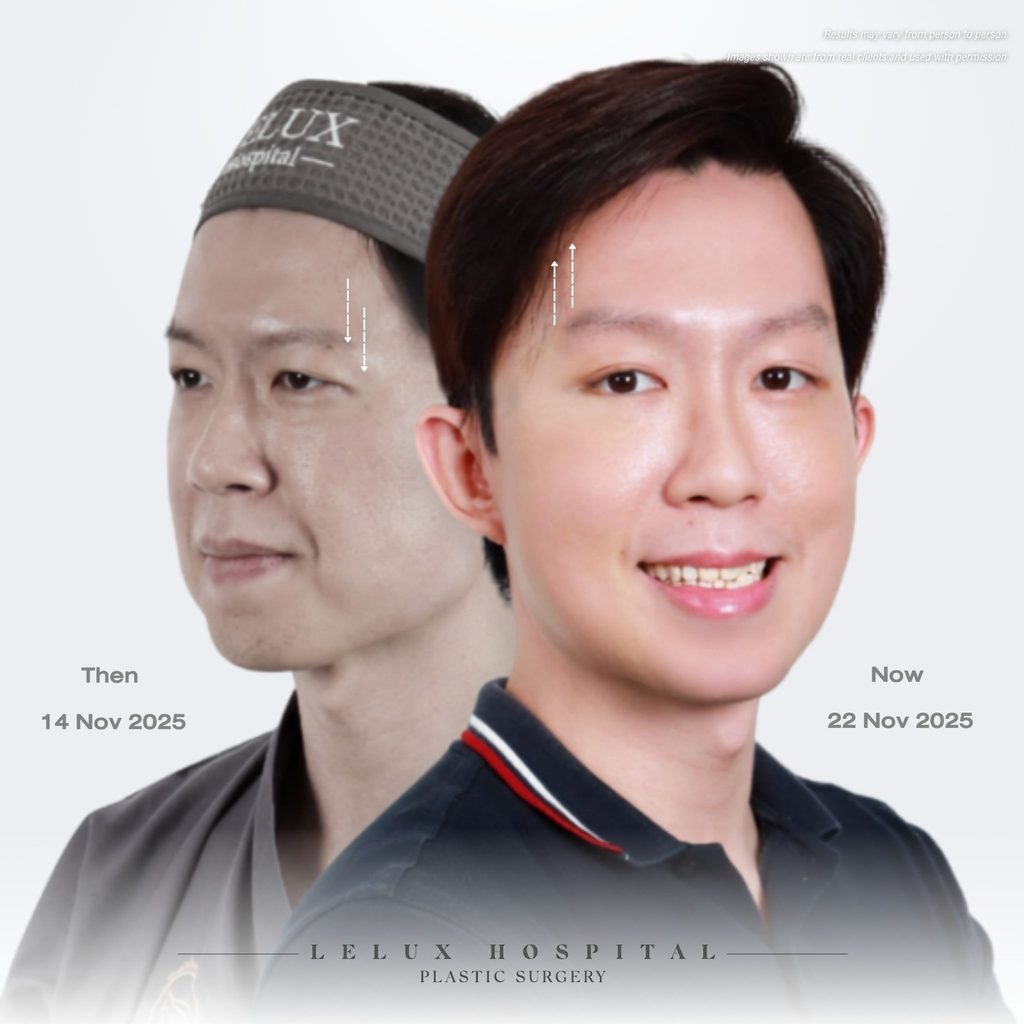
Tan Ei Shien underwent his Endoscopic Brow Lift on 14 November 2025.
The case photograph dated 22 November 2025 provides an early follow-up reference approximately eight days after the procedure.
At this stage, visible changes can be observed in the position of the brows and the overall appearance of the upper facial area when compared with the pre-treatment photograph.
However, an image taken approximately eight days after surgery represents an early stage of recovery, rather than the final result.
During the early healing period, patients may still experience:
- Swelling
- Tightness
- Temporary changes in sensation
- Bruising
- Tissue adjustment
The brows and forehead can continue to change as swelling gradually subsides and the tissues heal.
For this reason, later follow-up is important when evaluating the longer-term outcome of brow lift surgery.
Brow Lift Planning Is About Balance, Not Simply Height
The goal of brow lift surgery should not be to raise the eyebrows as high as possible.
The brow position should remain proportionate to the patient’s eyes, forehead, hairline, and overall facial structure.
During consultation, the medical assessment may include:
- Natural brow shape
- Inner and outer brow position
- Brow symmetry
- Relationship with the upper eyelids
- Forehead height
- Hairline position
- Skin and tissue condition
- Previous aesthetic procedures
- Patient expectations
The direction and degree of lifting should therefore be planned according to the individual face.
A personalized approach helps avoid an excessively elevated or unnatural-looking brow position.
Endoscopic Brow Lift Results: Case Observation
When comparing the images from 14 November 2025 and 22 November 2025, changes can be observed around the upper facial area.
In this individual case, the later image shows:
- A more elevated appearance of the brow area
- Greater openness around the upper eyes
- A clearer relationship between the brows and eyes
- A more defined upper-facial appearance
Because this image was taken during the early recovery period, the appearance may continue to change as healing progresses.
Before-and-after images should also be interpreted with care, as lighting, facial expression, hairstyle, camera angle, and other photographic conditions may influence appearance.
These photographs represent one individual patient and should not be interpreted as a guarantee of the same result for another person.
Planning Endoscopic Brow Lift Abroad: Considerations for International Patients
For patients traveling to Thailand for brow lift surgery, planning should include both the surgical procedure and the recovery period.
Before traveling, international patients should discuss:
- Initial medical assessment
- Recommended surgical technique
- Pre-operative health requirements
- Expected recovery period
- Recommended length of stay in Thailand
- Follow-up appointments
- Medication and wound-care instructions
- Appropriate timing for return travel
An initial consultation before travel may help the medical team understand the patient’s concerns and prepare a preliminary treatment plan.
However, the final surgical plan should generally be confirmed after an in-person examination.
Allowing sufficient time for recovery and follow-up before returning home is also an important part of planning surgery abroad.
Brow Lift Recovery Timeline: Why Early Follow-Up Differs from Final Results
It is common for patients to focus on before-and-after photographs when considering facial surgery.
However, early photographs do not always represent the final appearance.
After an endoscopic brow lift, the forehead and brow area require time to recover. Swelling gradually decreases, the tissues settle, and scars continue to mature.
Recovery may vary according to:
- Surgical technique
- Extent of tissue repositioning
- Individual anatomy
- Health condition
- Skin and tissue quality
- Post-operative care
A later medical follow-up provides a more complete assessment of healing and brow position.
Summary: International Endoscopic Brow Lift Case at Lelux Hospital
Tan Ei Shien’s case represents another perspective on brow lift surgery in Thailand—one that includes not only the surgical technique, but also the planning involved when an international patient travels specifically for treatment.
From the pre-treatment image on 14 November 2025 to the early follow-up image on 22 November 2025, his case provides a visual reference for the initial changes following an Endoscopic Brow Lift.
The final result of brow lift surgery should not be assessed from early postoperative photographs alone.
Brow position, swelling, scars, tissue healing, and recovery time may vary between individuals and continue to evolve over time.
Images shown are from an actual patient and are used with permission. Results and recovery vary from person to person. Individual medical consultation and assessment are required before surgery.